First hashed out: June 26, 2015 inside a clothing shop in Chennai
A few months ago, I started thinking about the way in which I’ve been privileged to consume and purchase peace throughout my life. These sentiments originate in a rebuttal to the cliché: money can’t buy happiness. True. Money can’t buy happiness, but it does buy peace. In this post, I speak about the peace that I benefit from on a daily basis, amidst a world in which most cannot fathom a similar experiences of peace.
I believe there is a definition of peace more corporeal than one of mind: peace as access to secure housing, comfort, education, and individual political freedom. Furthermore, I think that if one has access to this corporeal peace, they live with an unprecedented level of freedom. Bearing this in mind, one could make the argument that in today’s world, any peace one witnesses or experiences is contrived. People living in inner-city communities of the U.S. do not experience or consume peace and are not free in the same way as me. Similarly, individuals just outside this shopping mall in Chennai, India, marginalized people in the U.S. (and the world), kids and adults in war torn countries, and so many others do not experience freedom to the extent I do on a daily and hourly basis.
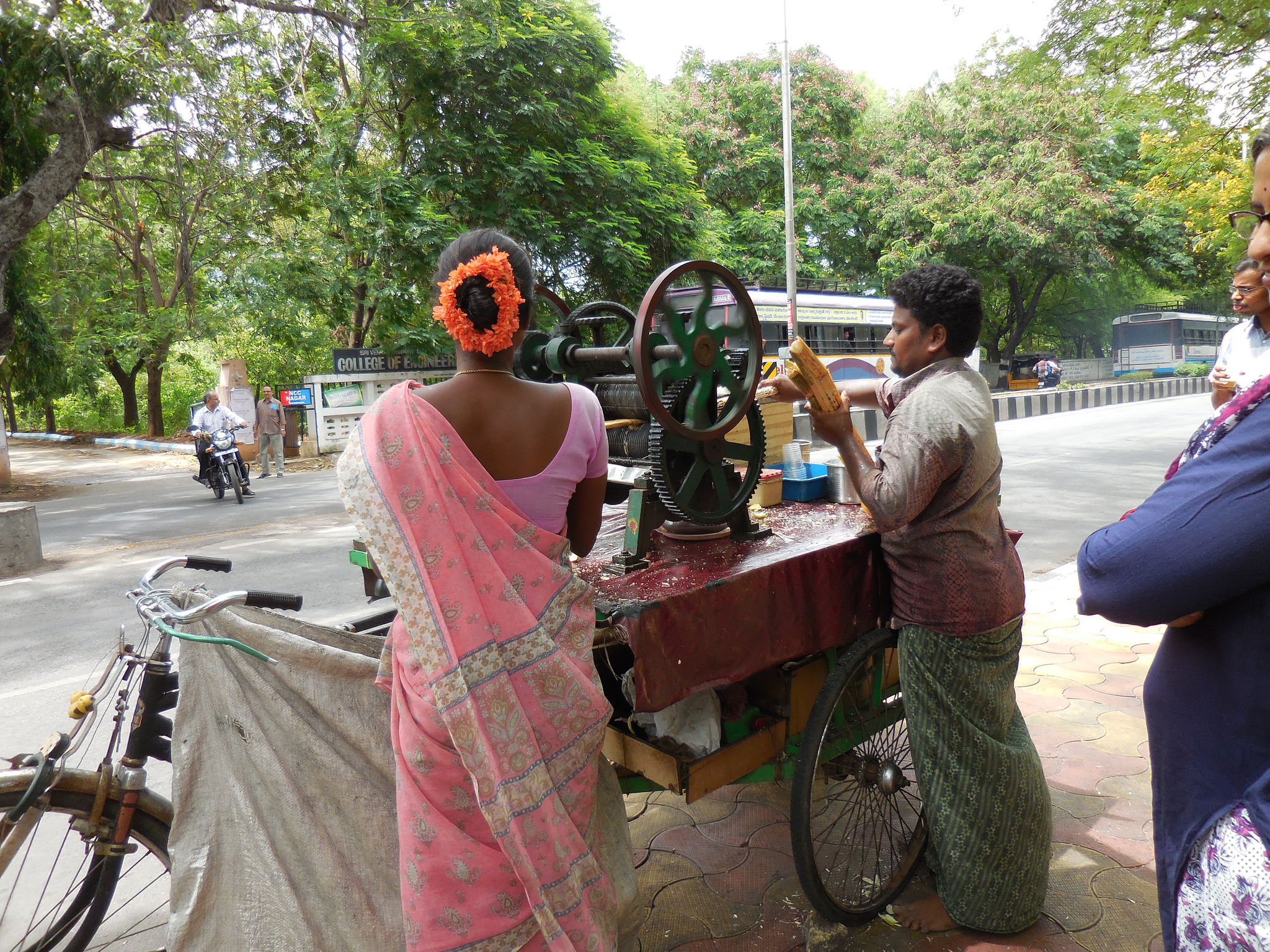
I first began to witness that money can buy peace and spur extraordinary levels of freedom and agency during my time at Pomona College—a green oasis of intellectualism amidst Los Angeles’ sunny skies, urban sprawl, and cruel poverty. My trip to India over these past two weeks has continued to confirm the rareness of my experience. Throughout this trip, and throughout my life, I’ve consumed and befitted from purchased “peace.” Examples of this contrived peace include spending an afternoon at a fancy Delhi shopping mall—replete with air conditioning and colossal Dior, Chanel, Gucci, you-name-it designer stores—that lies less than 50 yards from people living in homes made of mud, plastic, and some sheet metal. Similarly, I just graduated from an institution that introduced me to Bill Keller, fostered my exploration of a variety of subjects, helped me intern at the nation’s leading Latino law firm, and so on and so forth. What I am trying to say is the peace I’ve consumed has given and gives me access to an extraordinary education, upward mobility, and opportunities as well as a desire to see the world.

My upbringing was peaceful. I had secure housing, comfort, and access to education. I had access to the internet to apply to college, let alone the homework help that enabled me to attend an elite institution. I believe that all people have a right to live in a similarly nonviolent, placid environment that is able to foster and spur well-being and knowledge acquisition. Unfortunately, this is by no means the case.
To top it off, I just hopped around India with my two best friends after our college graduation. I’m feeling grateful, fortuitous, and privileged to a peculiar extent. When we arrived back in Chennai after our trip to Delhi, Agra, and Jaipur, our driver picked us up at the airport. In Tamil, he said to Cherry’s Mom, “What a life these girls live!” It’s unbelievably true. I travel, I eat three meals every day, and I satiate all of my intellectual curiosities. Not to mention the fact that I am free and empowered enough to have and pursue my intellectual curiosity.
This freedom continues to ring true since I have a fellowship to pursue my intellectual curiosity for the next 12 months. Unless I really mess up my budget, I will continue to purchase peace and exercise my freedom. I’ll watch baseball. I’ll meet players, young and old. I’ll meet scouts and fans. I’ll meet families propelled or possibly torn apart by the game of baseball that flourishes in Latin America. Amidst my adventures, I’ll think seriously about what it means to cultivate a humane existence in the world. What constitutes humane consumption when only some people can fathom, cultivate, and buy peace? How can my existence be humane when others live in fear of violence and wonder whether they will eat tomorrow? I hope to work towards the answers to these questions during the coming months.
Amidst the journey from Chennai to Tirupati, to the north through Delhi, Agra, and Jaipur, with one final return to Chennai, I saw a finitely small portion the cities and places which I visited. I don’t think I saw more than 10% of any city I visited in India. I’m okay with that. The trip was fantastic, and please stay tuned for a post about all the laughs and spices I had! Coming soon! Anyway, this trip was about immersing myself in Cherry’s world, so I practiced my “follower” skills which do not always see the field (baseball pun). That said, I think I only saw a small portions of the places I visited because so few people in India experience peace, freedom, and agency. Therefore, there were few places Cherry’s family wanted to travel to and wanted to show me. This limited perusal may be enjoyable, but I think there is danger in only consuming what one deems “the good”, and forgetting or dismissing what one deems “the bad” or “the ugly.” As I prepare to travel the world for a year, I want to see the good, the bad, and the ugly. I want to interact and engage with all of it on the path to fathoming what it means to cultivate a humane existence in a world that contains but isn’t limited to the good, the bad, and the ugly. I reaped the benefits of peace as a child, at Pomona College, and on my trip. Over the past 22 years, I’ve led a peaceful existence on the most basic level. Now, as full-fledged adult (am I?) I want to pursue a truly humane existence. Rather than solely consume peace, I want to account for the good, the bad, and the ugly. I think all three play a role in peaceful existence on a grander level.
On Democracy and Government
The inequality I witnessed every hour throughout my 17 day trip in India complicated my conception of the world, democracy, and what humane existence could look like.
India is the least democratic state that I’ve ever touched foot in, at least according to Freedom House (http://tinyurl.com/freedomhousescores).When I travel to the Dominican Republic in a month, I’ll visit a country to which Freedom House attributed the same exact scores as India. I think this might relate to why, during the spring, Pomona Professor April Mayes told me, “You can survive anywhere if you can survive in Santo Domingo.” Despite my evaluation, India and the D.R. are still ranked “free” which outdoes a lot of other places.
Nevertheless, I am struck with how little freedom I witnessed on my trip. Yes, the Indian government is elected by the people of India, but most people I saw had no individual agency or freedom. I witnessed this first hand when I tried to go for walk on my own and Cherry’s uncles started a household search party to find me. Their motorcade was purely an act of love. I am their guest. They are responsible for me. They care about my safety. But the fact that a woman walking alone in the small town of Tirupati was so alarming to them scares me and alludes to deeper patriarchal structures and the overall lack of agency that women hold. I experienced this in a highly educated, financially secure household, so I can only attempt to imagine the limitations other individuals with fewer means face throughout their life.
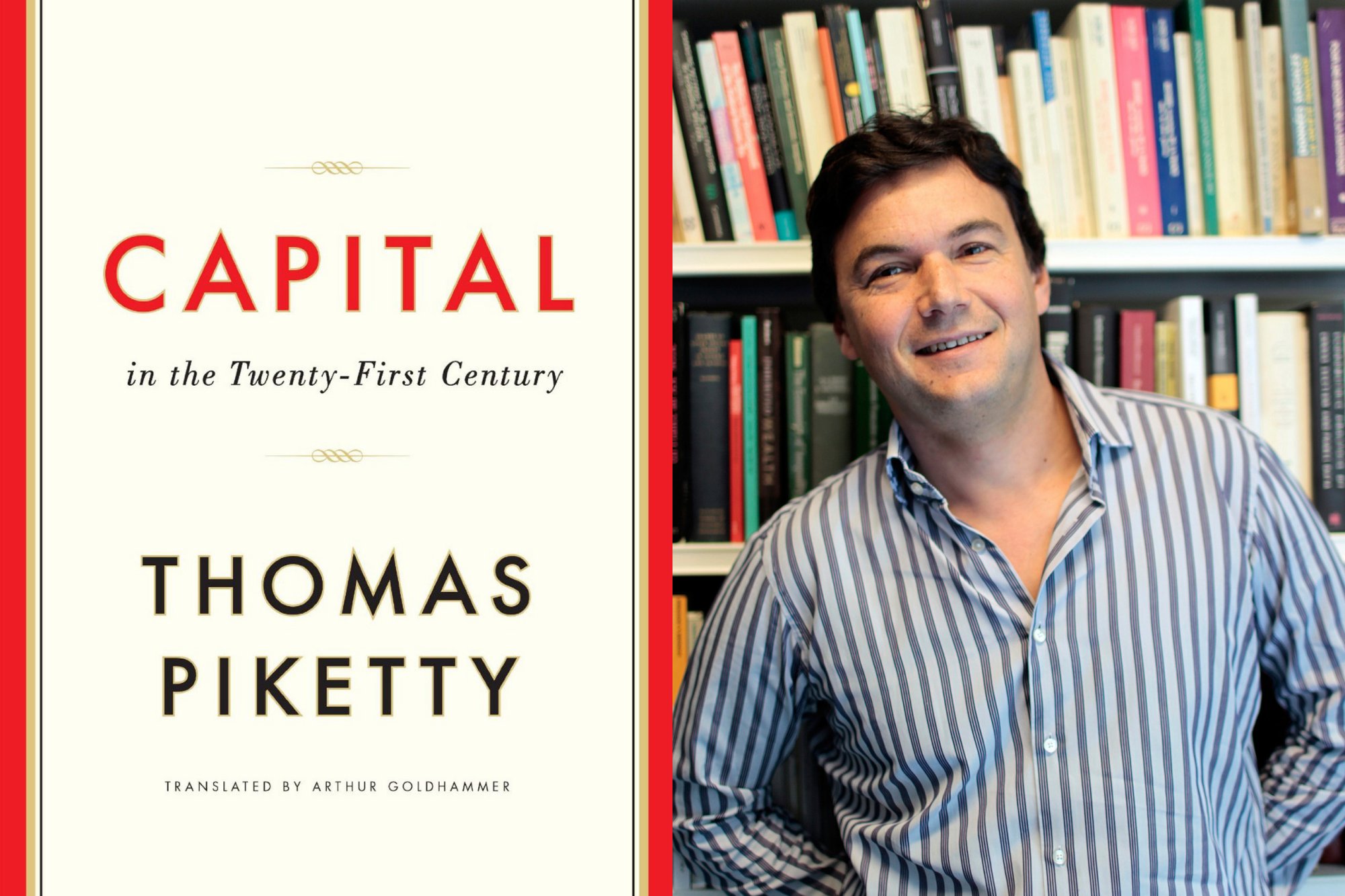
Witnessing some of the limitations people face in democratic states throughout the world, I’m possibly moving towards the idea that an enlightened monarch could govern better than democracy. In this case, I am suggesting a Pikettian-enlightened monarch ready to tax the wealthy and redistribute wealth to spur economic growth. Needless to say, I have some suggestions for the reorganization of global political life after my two week journey in India. I wonder what I’ll arrive at after my 52 week journey around the world. I believe blogging must be for this type of vulnerability. I hope you laugh at or with me, and maybe even tell me whether you agree or disagree!
Piketty cheat sheet: If you want to legitimately understand a 600 page / the economics book of the decade, just spend 60 precious seconds with this infographic. P.S. Thank you for a fantastic summer 2014, Professor Seery. Piketty and I will always have Summer ’14.

Lastly, my habitual acknowledgement: I was nervous about this blogging thing, partially because I knew I’d come up with some strong convictions. I was and I am unsure if my audience or my future self will be ready to read my persuasions. Regardless of whether I hold the econometric background to speak to all of these things, I’ve been taught to exercise my freedom and intellect to the utmost. So, here I go! Enjoy, and maybe giggle at this with me right now or in a few years when tides turn and I’m a member of the Peace and Freedom Party.
Lastly, please stay tuned for another post recounting some of laughs, spices, and adventures that I only just experienced.


The journey has begun – it is going to be AMAZING! Your fan base will keep growing.
Love ya, Mom
LikeLike
I am so glad you have read Picketty! The Dalai Lama said that if humanity is going to improve in this century, it will be thanks to Western women, because they have both the freedom and the heart to do it. Enjoy your trip and write on.
LikeLike
Love your questions! I’m looking forward to more questions and how you struggle with them. Nice to have you just a click away. Keep blogging
LikeLike