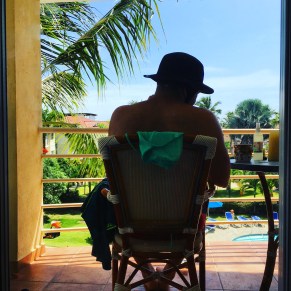
Less than three weeks remain in my yearlong investigation into baseball on islands outside of the U.S. After 11 months, the end of June brought a visit from my brother. His visit immersed the two of us into a friendship with Omar and Kelvin—our kiteboarding instructors.
As soon as I saw kiteboarding on the northern coast of the Dominican, I knew my brother would love the sport. Having ditched the prospect of surfing before ever entering the water, I thought kiting would be a good activity for us. My brother, these days locked in skyscrapers, office buildings, and airplanes, craves the outdoors. We shared a week together. I’ve called the Dominican Republic home two separate times during the past year. It was therefore a joy indulge my brother’s craving to spend time outdoors while guiding him around, across, and through this Caribbean island.
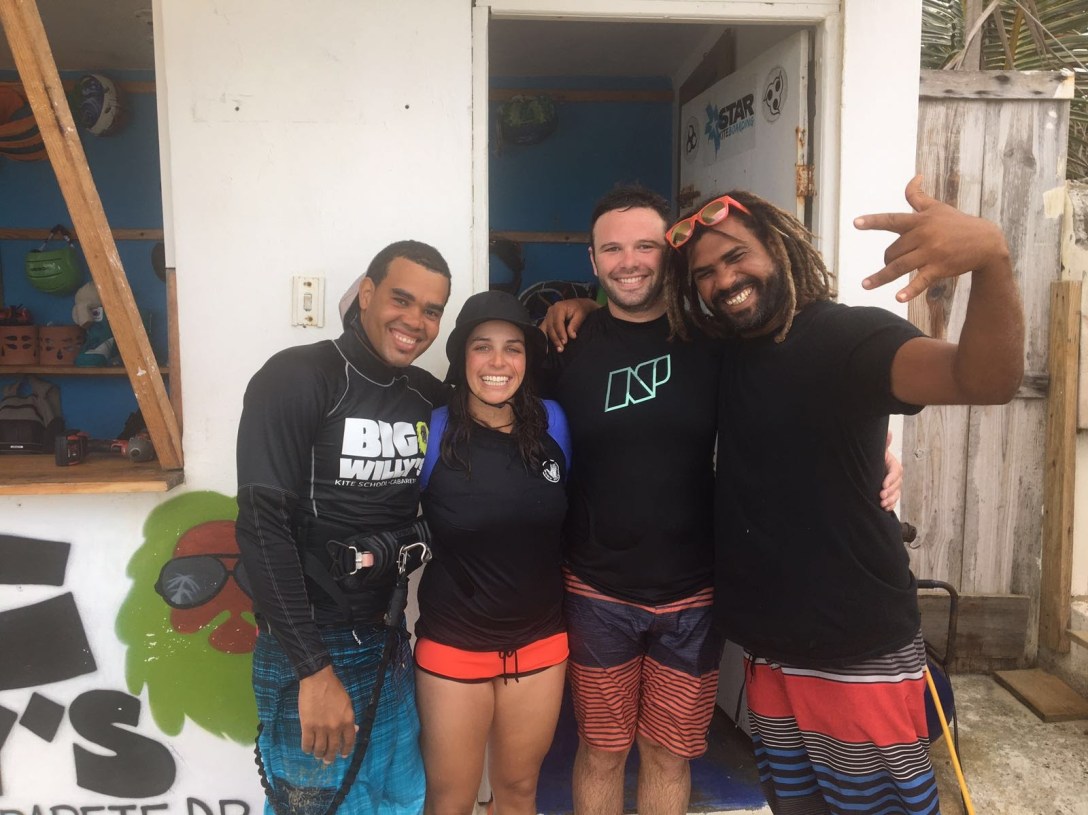
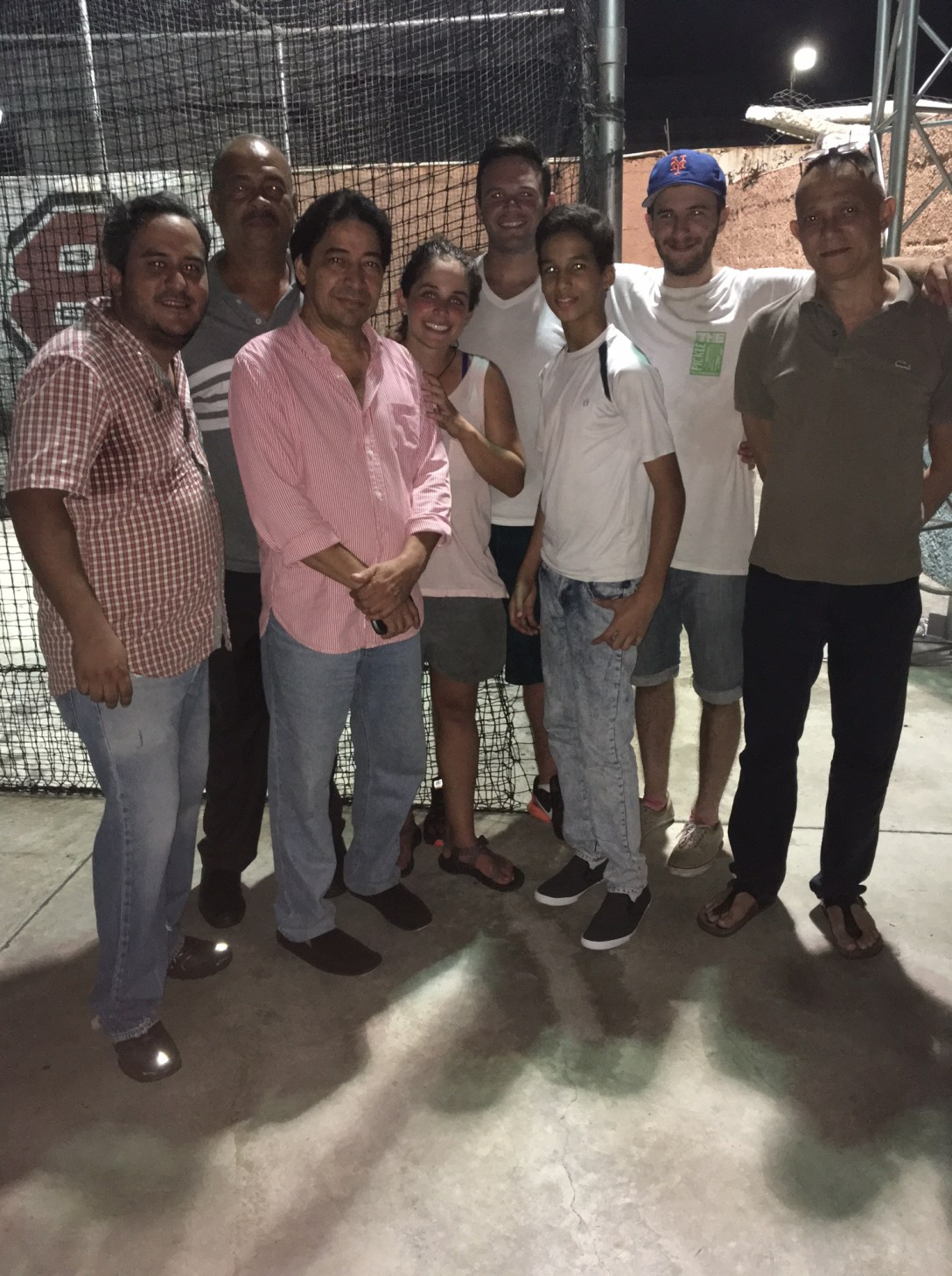
Today’s story begins with the relationship and conversations Joe and I cultivated with Omar and Kelvin. Following a recommendation from a friend, my brother and I enrolled at Willy’s Kite School. In two days of schooling, Joe nearly had the sport down, due to both his affinity for boarding (usually snow, now kite) and our lovely instructor Omar. Omar, 27, guided my brother through the learning curve of the wind, flying the kite, and adding the board to the mix. Omar’s assistant, Kelvin, oscillated between both Joe and me, offering me more guidance than he could offer my brother. Omar’s English language ability is near-perfect when discussing kiteboarding, the wind, or the ocean, but once post-school conversation over beers swerved to geography, politics, and upbringing, Omar’s language ability dropped off. He gets to practice his kite-related English every single day, but I’m not sure how many of his students generously treat him to cerveza as my brother insisted. Kelvin, meanwhile, speaks essentially no English, which posed little problem and allowed me to act as an intermediary, bringing Joe, Omar, Kelvin, and I into shared conversation.


My brother was eager to hear Omar and Kelvin’s life stories. They were also keen to hear ours. It surprised them that Joe and I weren’t husband and spouse, but rather are brother and sister. From there, we dove in. We explained that Joe lives in New York, and I have been travelling alone for the last 11 months. We’re originally from California. Joe works a ton, so he hasn’t had the opportunity to visit me at all.
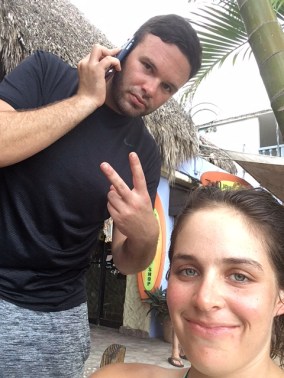
“Luckily, unlike from California, it’s fairly easy to travel to the Dominican from New York,” Joe explained, “So, I had to visit.”
The fact that my brother and I described travelling between New York and the Dominican with the word ease shocked Omar slightly.
“Will you show me a map!” Omar emphatically asked. With this comment, and so many others, both Omar and Kelvins’ curiosity, intelligence, and interest in the global community struck me. I’ve felt my personal curiosity and brains catalyzed by four years of undergraduate study and my yearlong research project. Meanwhile, neither Kelvin nor Omar finished high school. It’s beautiful and reassuring that intellect is ingrained in people, but I can’t help but wonder what could happen if Omar and Kelvin had access to education and information like my brother and I have.
So, Joe snatched out his iPhone, and with a few taps and clicks, on a secluded Caribbean beach, we could show Omar how close New York was to the Dominican, especially in comparison to California.
“It takes three hours to get to New York from here. Whereas look! To get to California from New York, it takes nearly 6 hours!” Omar and Kelvin couldn’t believe it. The fact that it could take less time to travel internationally than between two of the United States defied preconceived notions of how nations worked. Shouldn’t California and New York be closer to one another than New York and the Dominican Republic? Not necessarily.
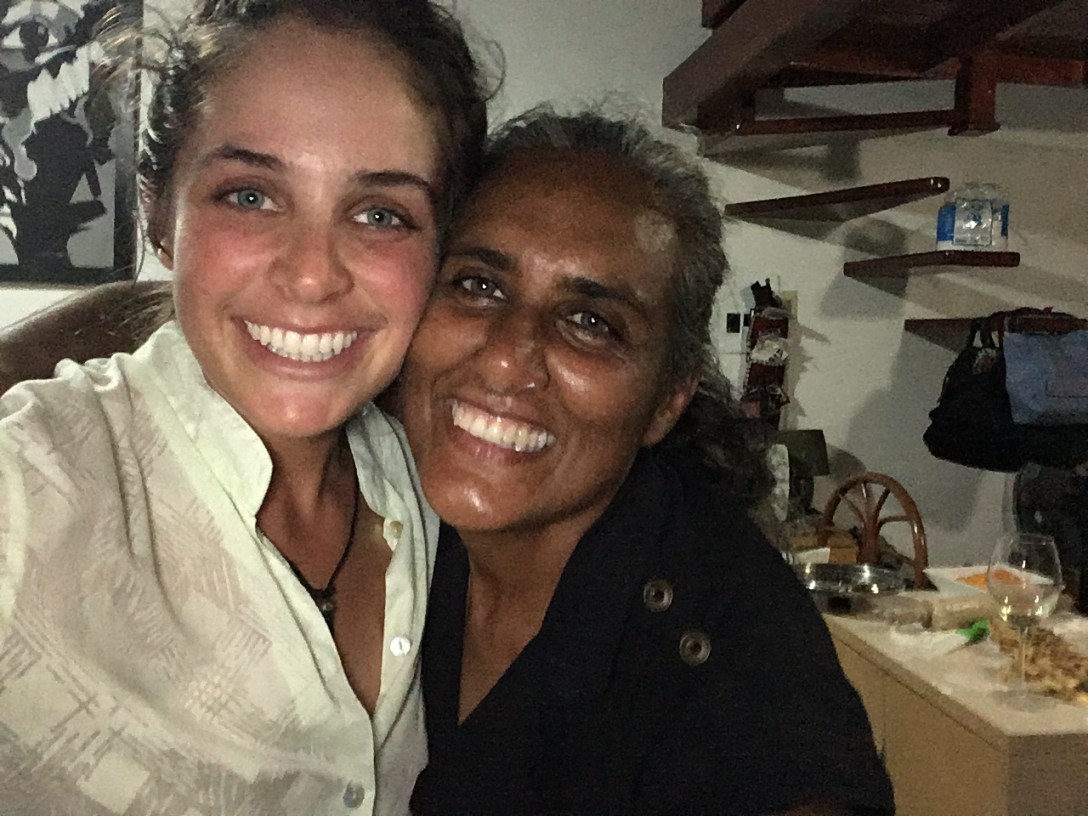
Joe spoke to Omar in English; I translated in Spanish to Kelvin. My brother had brought them Presidente beers after a morning spent inhaling the ocean and faceplanting into the surf. I, personally, cleansed my sinus passages more than I kiteboarded. I haven’t yet solved the equilibrium conundrum between the board, my body, the ocean, and the kite. I am first working on truly cleaning my sinuses. They have bothered me for years. I hope I haven’t discussed them ad nauseum on this blog. Urged for years to use a neti pot by doctors, a father, and friends, the idea and the prospect of water up, inside my nose and facial passages horrified me. I still feel a tinge of anxiety at the thought, but the Caribbean Sea helped push back on this fear. It will continue to. Joe treated me to five more hours of kite lessons prior to departing the island. I’ll expend them next week, or the following week, depending on how my work goes.

Having the privilege to show Omar and Kelvin New York’s proximity to us with a few meager flicks sent me into thought about maps.
I am a cartographer. In the 9th grade, I was forced to become a cartographer. I had no choice in the matter. A graduation requirement at Ralph Waldo Emerson Junior High School was a semester-long geography course with Ms. Ansler. We spent the entire semester drawing maps of every continent and nation to prepare for the final exam: on a blank map, one had to name every country. The politics of this act strikes me. I am sure we did not put Palestine on the map. I am sure I was not required to designate Hong Kong. I don’t remember if I was asked to label Taiwan.
For me and for the purpose of today’s blog post, the word map signifies a visual representation of both geographic and political space. I simultaneously point out that the word map speaks to other representations of space. It speaks to areas, nations, and people under surveillance. It speaks to visual depictions that reveal the surveillance we are party to, but to which most people will never have the ability to study or clearance to see. I also want to begin to discuss representations (other than the visual) of geographical and political space that could currently help move communities, institutions, and societies towards positive change.
I want to think about and discuss the following: Who draws maps? Why was I told and granted the privilege to draw maps from a young age? Who is currently redrawing maps of Syria? Why don’t any of the 30 Major League Baseball Academies that dot this island appear on Google Maps with a standard search? Who draws maps of the Islamic State’s current territory? Who has the power or ability to map Gaza or the West Bank?
Who is (re)drawing maps of Rio de Janeiros favelas prior to the Olympics? Prior to the World Cup, and right now, as August’s Olympics approach, companies, entrepreneurs, self-taught graphic designers, and self-taught cartographers, are sketching maps that will allow international visitors to traverse and navigate Rio’s winding streets, stairs, and communities that cling to its luscious green hills. The favelas (translates to slums) have been rebuilt, restructured, and demolished in recent years to attract and welcome two mega-sporting events. The same (re/de)constructive process occurred prior to and throughout the filming of Michael Jackson 1996 video “They Don’t Care About Us.” Do favelas cling to hillside in the same manner now as they did when Michael graced them with his head bobs and hip thrusts? Prior to August’s Olympics, the hillside communities have changed significantly. Dave Zirin discusses the public-private parternships that has redrawn these hillsides in his book Brazil’s Dance with the Devil: The World Cup, The Olympics, and the Struggle for Democracy. I recommend the book to anyone who plans to watch the Rio Olympics. Zirin tells the story of people bought, shoved, and chased out by developers eager to warn them of landslides while snatching their ocean views.[1]
During the last decade, the public of Brazil, and the public of New York have paid for new athletic facilities that they now cannot afford to visit. The new Yankee Stadium is the most expensive stadium ever built. The $2.3 billion stadium was built with $1.2 billion of public tax subsidies. Prior to the World Cup, Rio’s legendary Maracaña Stadium received a $500 million facelift to make the site of the 1950 World Cup a 2017 “FIFA-quality” stadium. Chris Gaffney, current Rio activist and former professional player, describes the facelift as the, “killing of a popular [public] space in order to sell Brazil’s culture to an international audience.”[2]
Who used to have access to Yankee and Maracaña Stadium and who now has access to them? In 1999, the Maracaña had a capacity of 175,000 that with standing room could surge to 200,000. After modernizations in 2000, 2005, and 2014, it now seats just 75,000. Yankee Stadium has also shrunk. Access to the stadium has also changed. In 2005, baseball fans arriving by subway would exist at 161st Street Station, cross the street, and enter “The House That Ruth Built.” It had a capacity of 56,936. Baseball fans now arriving at “The House That George Built” by subway get off at renovated 161st Street station that connects directly to the Stadium. No crosswalks. The new stadium now holds 49,638.
Why are we increasing exclusivity of sporting events? How did we convince the public of Rio and New York to build stadiums in which they cannot afford tickets?
The relationship that kiteboarding sparked between Kelvin, Omar, my brother and I recalls the democratizing power of sport that once existed differently in the past. So many of my college professors tell me stories of playing ‘stick-ball’—street baseball—in their cities as children. Art Horowitz told me tales of his stick-ball showdowns in the parking lot of the old Ebbets Field. The images and memories he shared with me have charm and magic to them that only an equalizing force provides. Horowitz wasn’t only playing stick-ball with other Flatbush, Brooklyn Jews. He was stepping into the batter’s box against brown children, Italian boys, and black boys.
On six islands and one continent throughout the past year, I’ve seen how amateur sport has been corporatized and is now administrated by private entities. This increases players’ chances to have a uniform jersey. Meanwhile, it squashes something from the sport. The spontaneity, freedom, and unexpected that existed in Ebbets Field parking lot stick-ball does not exist in privatized sport.
As sport is privatized, I see a similar phenomenon in education. For example, after Hurricane Katrina, more than 100 of New Orleans’ schools were privatized. Is education also becoming privatized on a global scale? Is that a good thing? My brother and my ability to whip out iPhone map and show Omar and Kelvin the Americas’ geography with a few taps has me wondering who access to education and maps? Who can study them both at school and in a home? Who draws them?
How can, when will, and who will (re)connect sport to democracy? I’ll be pondering that during my final three weeks of attempting to play baseball with the boys. It turns out Omar and Kelvin’s boss, Willy, is in a recreational baseball league that he wants to show me. I hope the four of us will team up on the diamond sometime this week.
[1] Zirin, Dave. Brazil’s Dance with the Devil: The World Cup, the Olympics, and the Fight for Democracy. N.p.: n.p., n.d. Print.
[2] Zirin, Ch. 1.
 Reconciling with the Diamond (A Girl's Best Friend)
Can you chat & 4 my time? If so, call on the cell.
Doc
Sent from my iPhone
LikeLike
Great it has come a long way from the draft !!!! You know this but it is amazing to me that another sport that is smashed with a new stadium is the SF (San Mateo) 49er’s. I think they are the highest in NFL rankings. Over $650 for a family of 4. Not to worry not my sport and it raises the question of geography too how come are the SF team when they are in another city 42 miles away from the baseball stadium. I always thought having stickers of countries on a map would be the way to go, that way as the countries change you could adjust. I think this might be an interesting conversation with Joan who was a geography major and worked in the field. ( I could be wrong)Enjoy the next weeks. How did working at the vegetarian restaurant go? OODLEs and oodles of love Auntie >
LikeLike