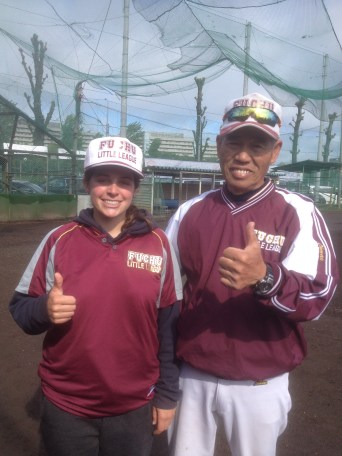
I said goodbye to Fuchu Little League last weekend. The Tokyo Little League empire with two Little League World Series Championships, current Nippon Professional League (NPB) players, and rigid gender roles welcomed me, allowed me to defy their gender roles, and looked out for me for two months.
I’ve entered the final two months of my journey.
As I left Fuchu’s baseball diamond, I was filled with an intense sensation of relief and happiness.
That alarmed me.
It goes in contrast to what I was told the Watson was supposed to be. I won’t forget a quote Pomona Professor Art Horowitz shared with me two years ago. He led an info session for the Fellowship, and his presentation included a former Watson fellows standing gloriously atop a mountain beside her quote: “packing my bags was easy, but each time I pack my heart, it’s insurmountably difficult.”
That quote stuck out to me for a variety of reasons. First, I think it’s hilarious. A daunting reality of the Watson that I continue to work through is that my research, my project, and what I am trying to accomplish, rarely looks like me atop a mountain, arms and heart to embrace the world. Even the Watson, a year-long, worldwide, solo, journey into my greatest passion is often mundane.
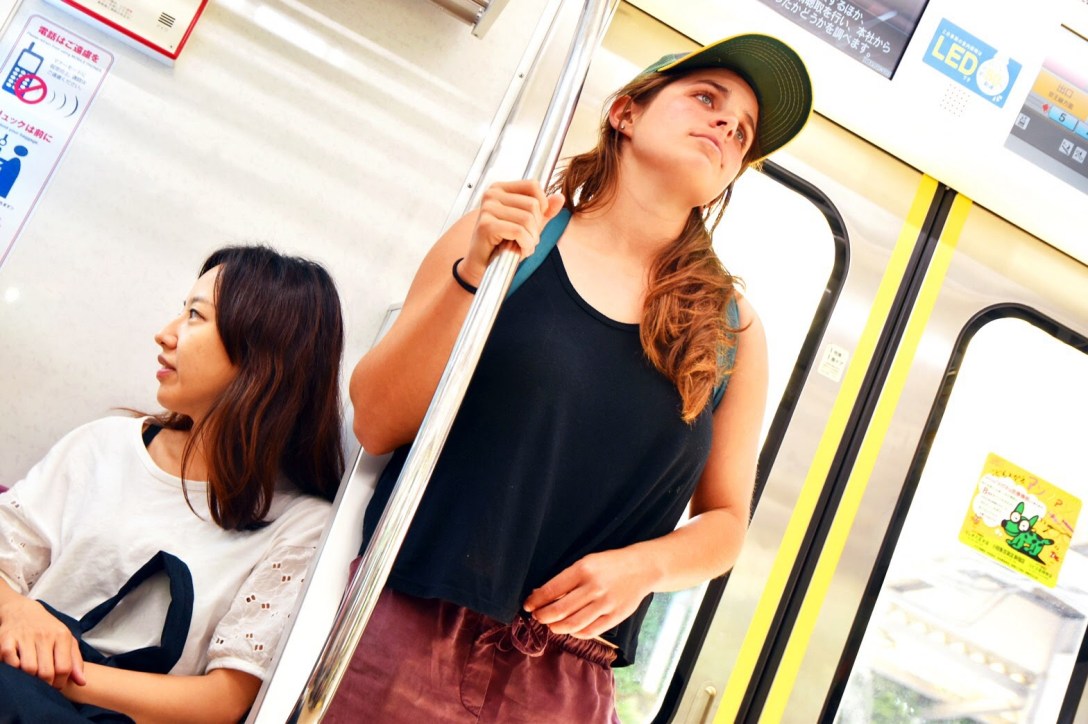
In Japan, my reconciliation lacked glamour and guaranteed me countless hours of required baseball.
Practice at Fuchu Little League began at 7:30AM, so in observance of cultural formalities, I would arrive at 7:15. Practice would then span 10.5 hours with one-hour lunch break. Then, I’d go home, dirt caked in my nose and lungs from so much time spent at the baseball field. I’d eat, sleep, and do-it again.
When I arrived at Fuchu practice at 7:15, there were always players who had arrived early and were amidst batting or defensive drills. They sought extra practice.
9.5 hours isn’t enough.
I inquired and discovered that the best, most serious Fuchu players, the ones on the 14-man roster currently seeking a bid to travel to Williamsport, Pennsylvania for the LLWS, arrive at 5:45. The city of Fuchu opens the gate to our field at 6:00AM. Thus, the best, most serious players arrive at 5:45 to enter the ground as the gate opens and receive extra groundballs from coaches.
I share these details in an attempt to convey the mundane insanity that is Japanese Little League Baseball. There is no time for other interests, be them intellectual, artistic, or recreational. There is baseball, the team, the renowned institution that is Fuchu Little League. That’s it.
I also share this to respond to one of the Watson’s suggestions. The foundation tells me I should move on when comfort exceeds discovery, yet I would never have felt comfortable at Fuchu Little League. I ethically disagree with the fact that 10.5 hours of mandatory practice truly means 11.5 hours of advised practice. I am repulsed by the notion that it’s appropriate to require moms to clean toilets and make hot tea for male coaches. Furthermore, the casual physical pain inflicted onto players, bats tapped sternly on their head, fingers flicked violently their brows, or groundball after groundball with no water or rest, must have a tipping point. If I had found comfort in this environment, I would have lost part of myself.
I am proud to leave Fuchu Little League and my time in Japan without accepting or allowing myself to feel comfort in an oppressive environment.
Yet, despite the stringent difficulties, Fuchu also gave me a lot of good. Specifically, the Niida, Okura, Iwata, and Kano families. They were so welcoming and silly with me.
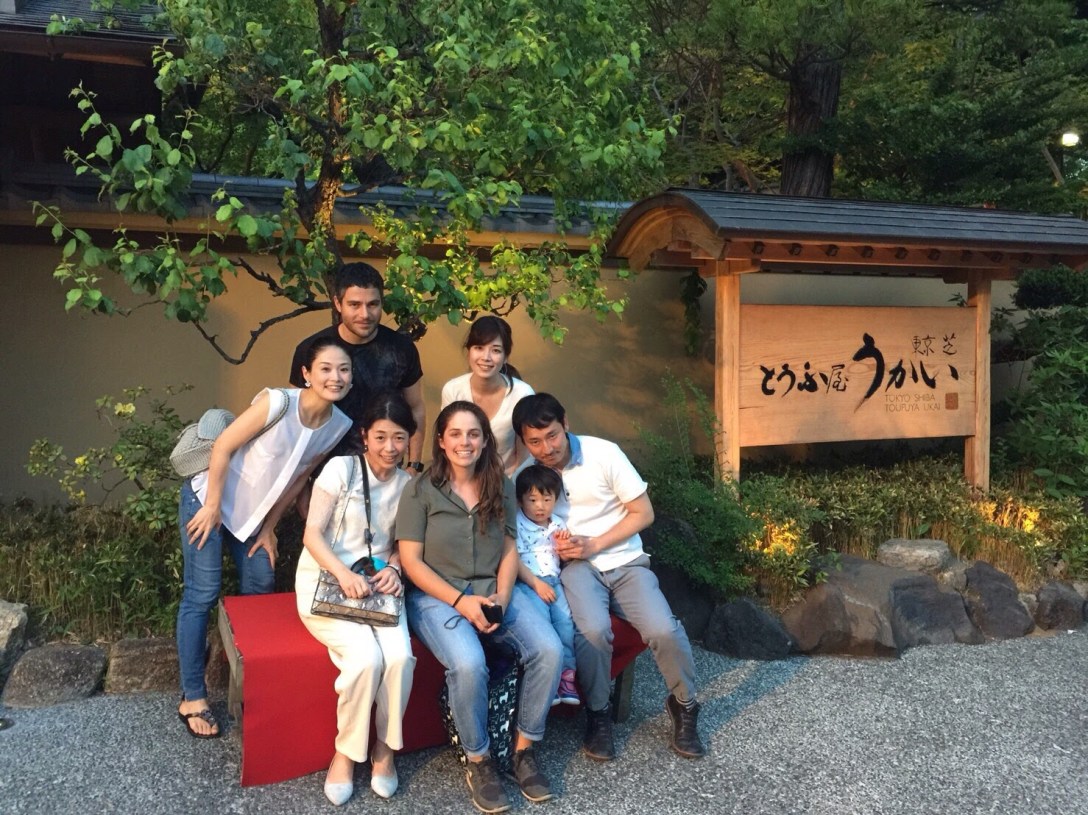
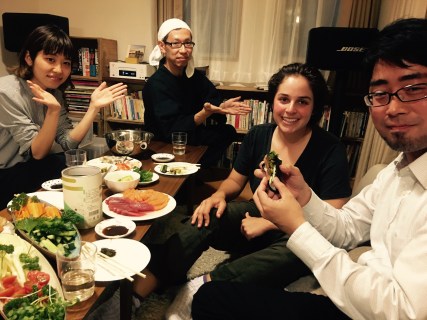
Yet, there are so many stories I’ve uncovered, that I am more moved to convey what Japanese baseball looks like than I am to wax poetic about sushi parties I shared with Niida and Okura families, drinking beer, eating sashimi, critiquing chopstick etiquette, talking politics and baseball. Dear readers, know that there is tons of good, it just doesn’t always merit tons of reflection, so the blog gets the other stories.
Back to the story at hand: when Yuki Niida decided to join the serious Fuchu empire, the Niida family had a meeting to discuss how the decision would impact all family members. One of the most apparent ways it would impact the family is that, Ryoko, the mother, would be required to serve toban. Thus, in addition to her 5 day / week job, mothers at Fuchu opt into working an occasional sixth day per week. Moms take turns, assigned to the duty of cooking for the Fuchu coaches, brewing them tea, and managing hydration for all players.
With Ryoko’s already intense office-job, the prospect of a Saturday workday on top of her work schedule was daunting. Thus, her husband, Naoki volunteered to serve toban in Ryoko’s role.
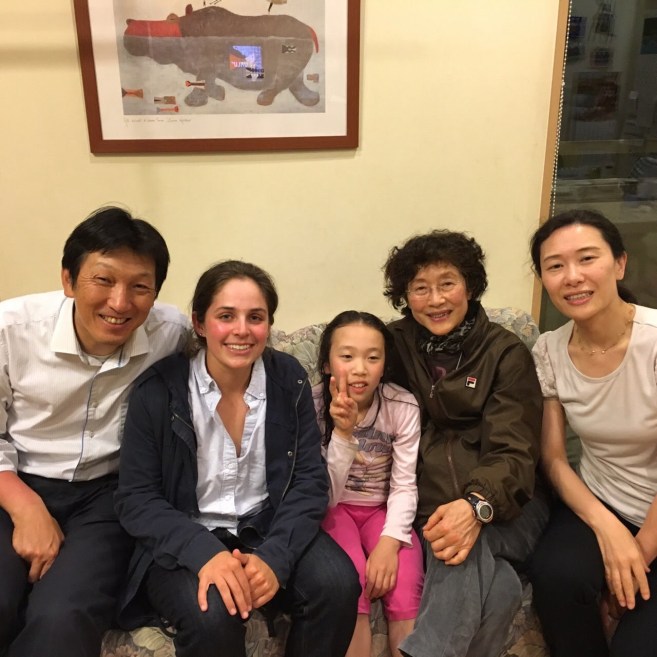
They approached Fuchu to ask if the husband could serve in place of his wife, but that option was denied. Toban—tea, food, & cleaning toilet duty—is relegated to Ryoko and the woman. Naoki could not serve in her place.
So, now, I’m going back to Santo Domingo: the biggest city in the Caribbean; the center of baseball in the Americas. I’ll be surprising my friends—Pablo, Jaime, Orlando, and Steven. I plan to show up at our colmado, enjoy one another’s company, and head to the batting cages. The plan is to spend the rest of May in the capital (Sto. Domingo) and then head to a northern town on the island where I can do three things:
- I want to attempt true reconciliation with the game of baseball on Hispaniola.
- I want to write.
- I want to learn to surf.
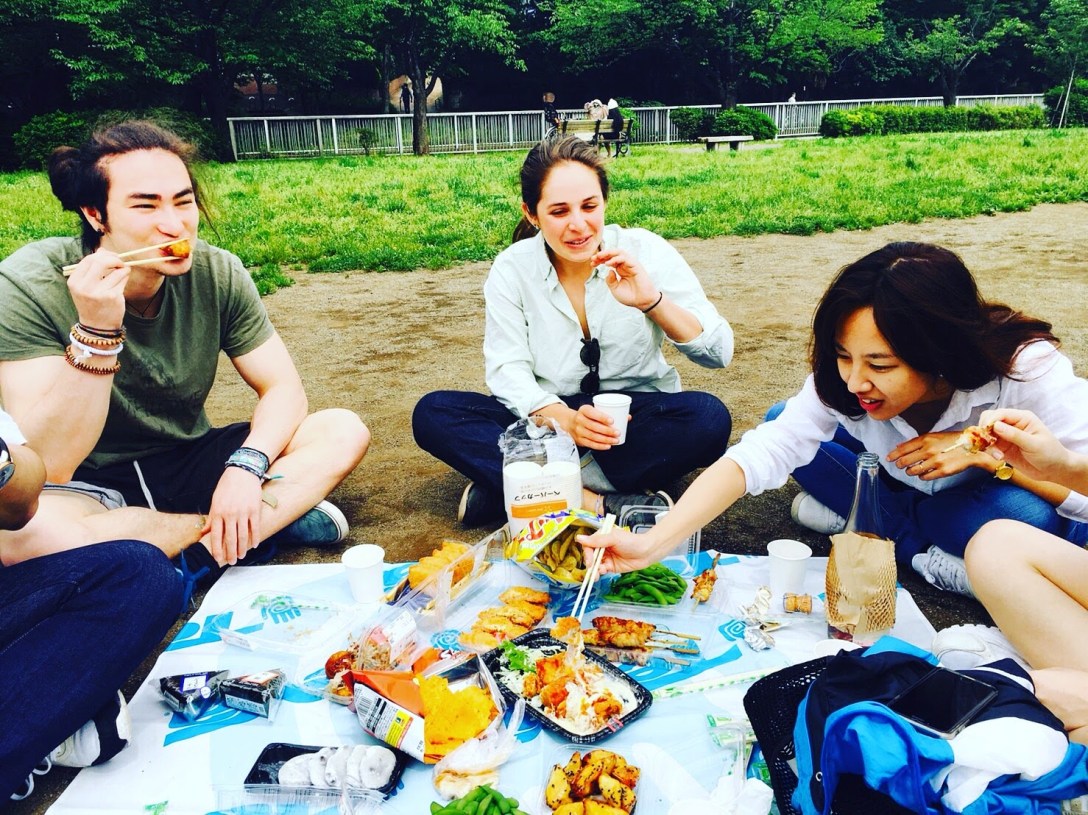
In July of last year, I was struck by the fact that baseball, recreation for me, represented the only possibility for economic mobility for young Dominican boys. Thus, what was sport for me was work for young Dominicans. Yes, Dominicans experience pleasure and use baseball as a vehicle for dreams just as I do now and did in the past, but in Dominican society, baseball embodies the possibility of having a home for so many families. I cannot imagine that. I’m trying.
This reality startled me, so I temporarily tabled my own pursuit of reconciliation to try to understand what life looks like for a young Dominican boy, what their chances are of making it to an MLB academy, and how the MLB institution interacts with and treats the Dominican people. I worked for MLB, participated in a few practices, but overall failed to pursue true reconciliation.
I have an understanding of those institutional questions and research avenues. So, now, with two months left, I want to know if I can play baseball with Dominican boys. I want to know if I can ball with Dominican men. I want to know if I can accept them for their reality and they can comprehend or belief their eyes when I play with them. Can we both account for one another’s relationships to the game?
The writing goal is outlined in the last emotive blog post.
And, lastly, the desire to learn to surf roots in the need for a new recreational practice. Baseball organizational difficulty, requiring 9 players to form one team, let alone another team to play against means that as I look forward in life, I need a recreational outlet that doesn’t require 18 adults and a huge field.
Furthermore, the Watson has brought intense surf. On a day-to-day basis, it feels as if I am treading water in huge waves or gasping for breath as waves crash on me. I nearly drowned when I first arrived the Dominican Republic. Something similar happened in Japan.
I want to learn to ride these waves, both in reality and as a psychological practice.

 Reconciling with the Diamond (A Girl's Best Friend)
Another great adventure! You are a hero. How about boogie boarding?
LikeLike
Without doubt. More on that in one second…
LikeLike
Hope you are getting settled back in the DR? Give me a date & time we can talk.
Doc
LikeLike
You’re next! http://www.cbssports.com/mlb/news/jennie-finch-set-to-make-history-as-the-first-woman-to-manage-a-pro-baseball-team?linkId=24906321
LikeLiked by 1 person
John:
You better believe it.
LikeLike