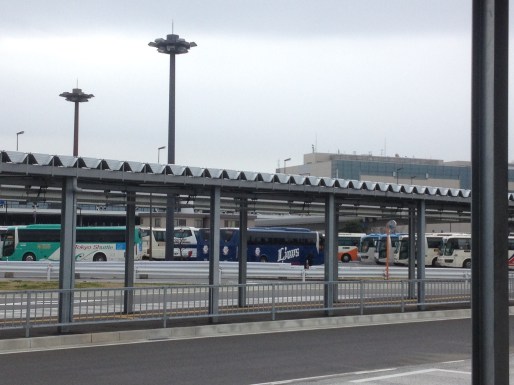
I arrived in Japan 11 days ago, just in time to catch a bus from Narita International Airport to Kichijoji Station. At Kichijoji, Karen Noll, my host picked me up. From there, we drove to her lovely home, in time for miso soup and rice before baseball practice. Karen and her husband Steve have lived in Tokyo for more than 20 years. I found my hosts through their daughter, Bessie, who played with Fuchu Little League, the same Little League I am preparing to coach for.
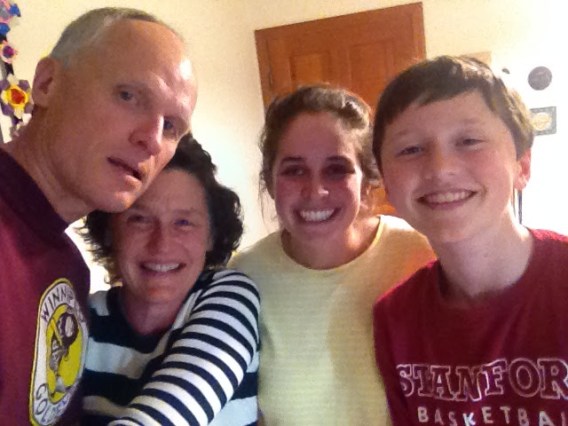
Bessie is at Stanford now, playing softball, but I’m not the only kid in the house. Theo, 13, is my new host brother. Theo also played in Fuchu Little League until last year. Thus, during our post-miso trip to practice on Sunday, Theo was an impeccable host and translator. Many of the Moms and coaches were happy to see him at the field. Theo gave up baseball just about a year ago after Fuchu failed to qualify for the Little League World Series.
Before I delve into my first week(s) in Japan, I’ll wrap up my time in Australia.
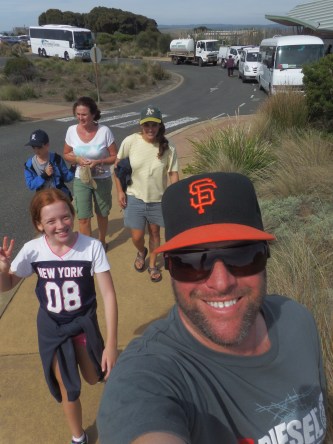
I’ve been graced with generous hosts throughout my travels. The hosts further my intercultural understanding and help fend off loneliness. In Australia, these hosts were the Fraim family. From the first to last day, I felt beyond welcomed and genuinely part of the family. We had a blast. Grandpa Larry (an American who left the US for a teaching gig in Australia at 22) has taken to Australia with his entire heart. He enjoyed meeting another 22-year-old on the road, since he did the same thing at his age. Larry and his wife Rhonda blanketed me in love as if I had Fraim blood in me. They took me to the airport at 1 o’clock in the morning for my final sendoff, but long before that, they played generous tour guides, designated drivers, and friends. With the Fraims at school and work during the day, I often hung out with retirees Larry and Rhonda, and we formed a solid, inter-generational friendship.


Jarrod, Corinne, Ash, and Ruby head to the U.S. for a two-month holiday beginning May 4. Luckily, my aunt, parents, brother, and a few friends have already agreed to attempt to show the Fraims the same hospitality I was showed, so that will be good. I look forward to face timing them once they’re with my family, and I’m in Japan, Korea, or maybe Cuba?
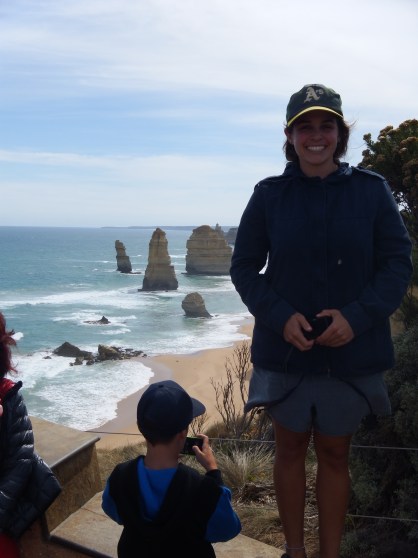
I presumed that playing baseball would have been the highlight of my Australia tour, but truly, the Fraims made the trip and standout as the best part. My stay would not have been remotely the same without them. If I wasn’t surrounded with their jolliness, my hitting slump likely would have sent me in a downward smile. Instead, I was able to shake it off, eating tons of hot chips and playing cricket with Ash. I think I eat more French fries in the past two months than I have in the past four years.
The Geelong Baycats organization won a premiership in the 2s, made the semifinals in the 1s and 3s, and overall welcomed me boisterously. Australia is an odd place. One example of this is the overwhelming and unsolicited financial advice I received from many members of the Baycats community, shocked to hear I wasn’t flying business-class or making it rain Australian dollars.
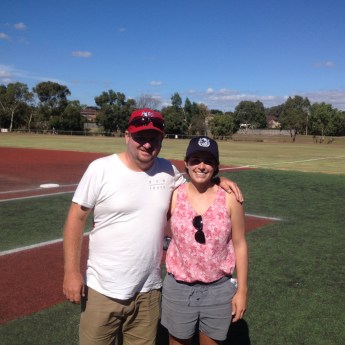
Australia also marked one of the first periods of homesickness I have ever experienced. I’ve always been independent, possibly to a fault. At age 4, I was at one of my brother’s baseball games in Oakland, playing in the flowers or something, when a foul ball conked me on the head. My Dad, Aunt, and Grandpa came over to help and comfort me, but I refused to be consoled by any of them. Instead I cried alone and said I wanted my Mom. Stubborn. But, back to loneliness, the town I lived in, Lara, Victoria, Australia resembled Davis, CA to an odd extent. It’s a rural place, surrounded by farms and flat as can be. To be in that world, to constantly speak English, and to wrestle with a 19-hour time difference made me feel extraordinarily far from home in a place oddly similar to home.
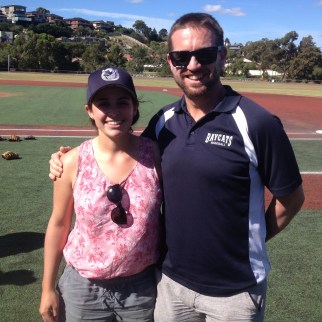
I attended the Baycats presentation night (what we call end-of-season get-togethers in the U.S.) only to leave early and drive across Melbourne to catch my 1AM red-eye to Tokyo. Thankfully, I had my fantastic chauffer(s)–Larry, Rhonda, Ash, and Jarrod. I hopped the jet, fell asleep, and woke up in Tokyo. Immigration and customs was a breeze; next thing I knew I was on a bus to meet my hosts. And then, off to baseball that very morning.
After the afternoon’s scrimmage, I introduced myself to the players, coaches, and parents of Fuchu Little League. The players bowed to me and yelled something I didn’t understand. In the most enthralling of moments, I introduced myself to the Moms and they all proceeded to clap and welcome me. The enthusiasm of the clapping caught me off guard. What I’ve come to understand in the past 11 days is that many of these Moms find my presence at the field extremely exciting. They’ve never seen a female coach and often been relegated to sidelines, kitchen, and hydration duty. Thus, many Moms welcome me with huge smiles, bows, and hellos whenever I see them. Meanwhile, other Moms won’t look me in the eye. They shy away from me. Karen tells me some Moms treated her like this for multiple years. This roots in a variety of things, one being the lack of racial diversity in Japan and the shock of seeing an American woman in their world. In my case, it also may come from intimidation. As these Moms are relegated to cooking duty, I’ve been granted the privilege to run around on the field and eat their food. Why have I been granted this experience rather than one of them? I struggle with that question.
The fact that I am a Coach for Fuchu Little League comes as a shock. After the past seven months and years’ trials convincing a variety of people I am not afraid of the ball and can navigate the world to some extent on my own, even as a woman, it’s a shock to be welcomed warmly and granted some authority. It is also a jolt since I pessimistically left my baseball pants and cleats behind in Australia, thinking I wouldn’t have much use for them. They wouldn’t fit in my suitcase, and I was sure they sell those things here in Japan. Thus, tomorrow I’ll be shopping for some baseball pants, unless Theo has some spares that fit me. Karen has already generously given me a makeover. It’s 70 degrees today, so spring is springing, but the makeover was utterly necessary during the past three days with highs of 40 degrees. After the past 10 months of summer (or 4 years) anything below 75 is cold for me.
This past weekend, and every upcoming weekend in Japan, will mandate my presence at the Fuchu Little League from 7:00AM to 6:00PM. To huddle into dugouts in freezing weather, while Moms voluntarily cook, Dad’s rake fields and keep the fire pit cracking, and coaches train 11 and 12-year-old boys for 11 hours marked my first experience in a world in which individuality means nothing, or very, very little.
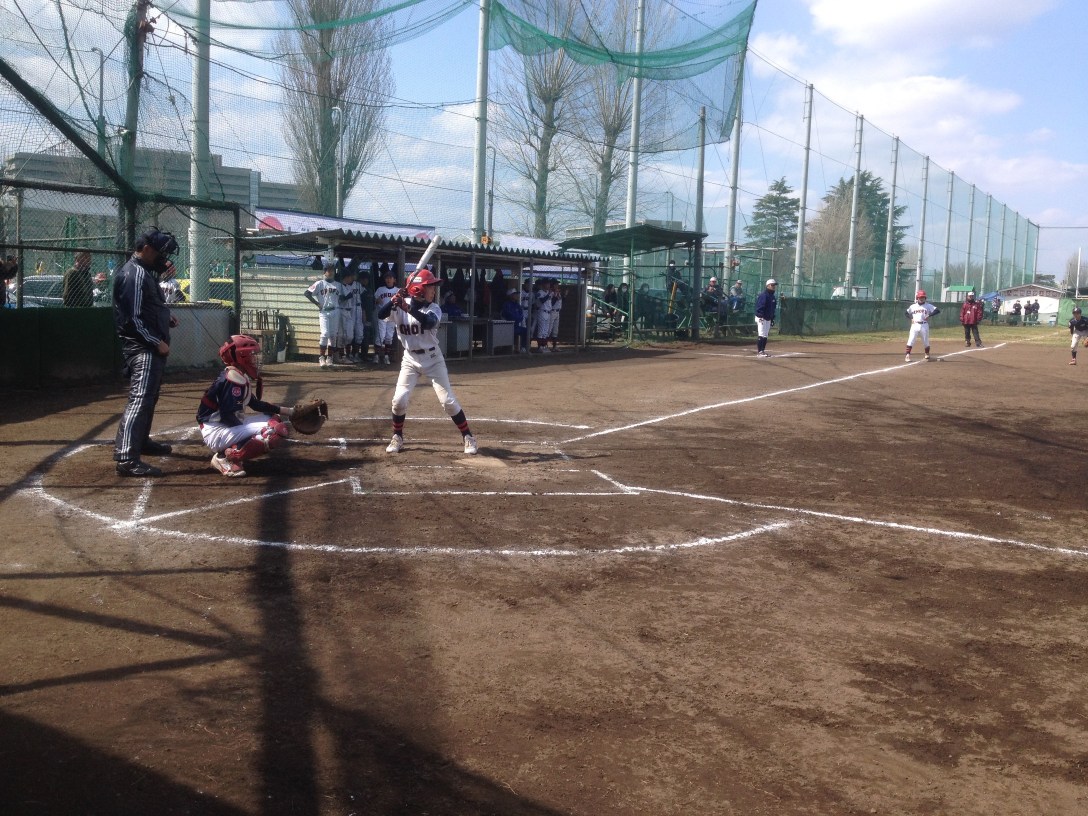
I arrived at the ballpark at 7:15AM on Saturday, Sunday, and Monday. On Sunday, I arrived thinking I was on-time, only to find out the entire Fuchu Little League team had been at the field since 6:30AM taking batting practice and preparing for their game against Kitasuna Little League—last year’s LLWS champions and Fuchu’s longtime rival. There is so much to untangle and discuss about my immersion into Japanese baseball and Fuchu Little League.
Wondering where to even begin, I’ve decided to start in the place that is likely the most-overlooked: the Moms. Every four weeks, each mom is on toban duty. Thus, they must arrive at the ground at 7:00AM to manage the players’ and adult coaches’ hydration, cook food, and possibly what would be the most difficult (for me)—be super present and ‘on duty’ for the entire day (no questions asked).
*click the toban link to read my host Karen’s take on the Moms’ mandatory volunteer work
I’m now a coach for Fuchu Little League. This means I’m the first ever woman to eat inside the small house or hut that houses the coaches while they eat their lunch. There has only been one woman to coach at this Little League, and for many years, woman were not allowed to set foot on the field. Thus, my presence and role gives me a peculiar glimpse into the world that is Japanese baseball and a Little League powerhouse.
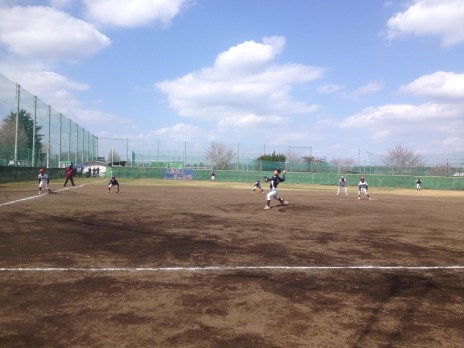
I’m not sure why adult coaches cannot manage their own hydration. I have yet to leave my own water bottle at home because it’s such a peculiar custom to so cared for and therefore have to enact no self-responsibility.
Originally from Minnesota, my hosts, the Noll / Welckle family support me through every question and misunderstanding. Having spent 20 years in Japan, they are able to translate and explain all questions I have from both an American and Japanese perspective. My stay would drastically differ without their constant help. Thanks to them, I know that if practice starts at 7:30AM, it really starts at 7:15. Their guidance also led me to find the local thrift store, my new running route around the Fuchu cemetery, bullet-train tickets, and so much more.
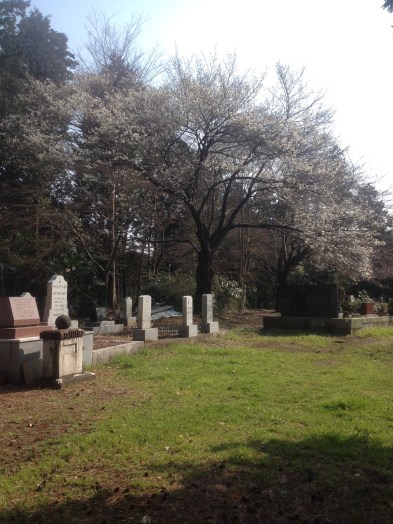
Onto what has amazed me the most in my first 11 days here: my new community’s grit. Karen has been able to translate the insanity of Fuchu Little League’s practice regimen through this nation’s Buddhist roots. Fuchu Little League, and basically every baseball team in Japan, takes off time at New Years. Apart from a weekend at the start of the year, coaches, players, Moms, and Dads practice, watch, and live baseball every single weekend from January through December. In just three days (one weekend) of this dedication to the game, I nearly lost my mind. As coach, I threw a few balls, trained a few catchers, and stood around, yet I will still exhausted by the end of the first, second, and third day of practice. When the weekend ended, I was slightly disoriented. This disorientation roots in the insanity of the yakyu (baseball) practice regimen here. For example, we played three scrimmages on Monday and then proceeded to practice for an hour and half. Then, the players conditioned, stretched, cleaned the fielded, and the day’s final bows ensued.
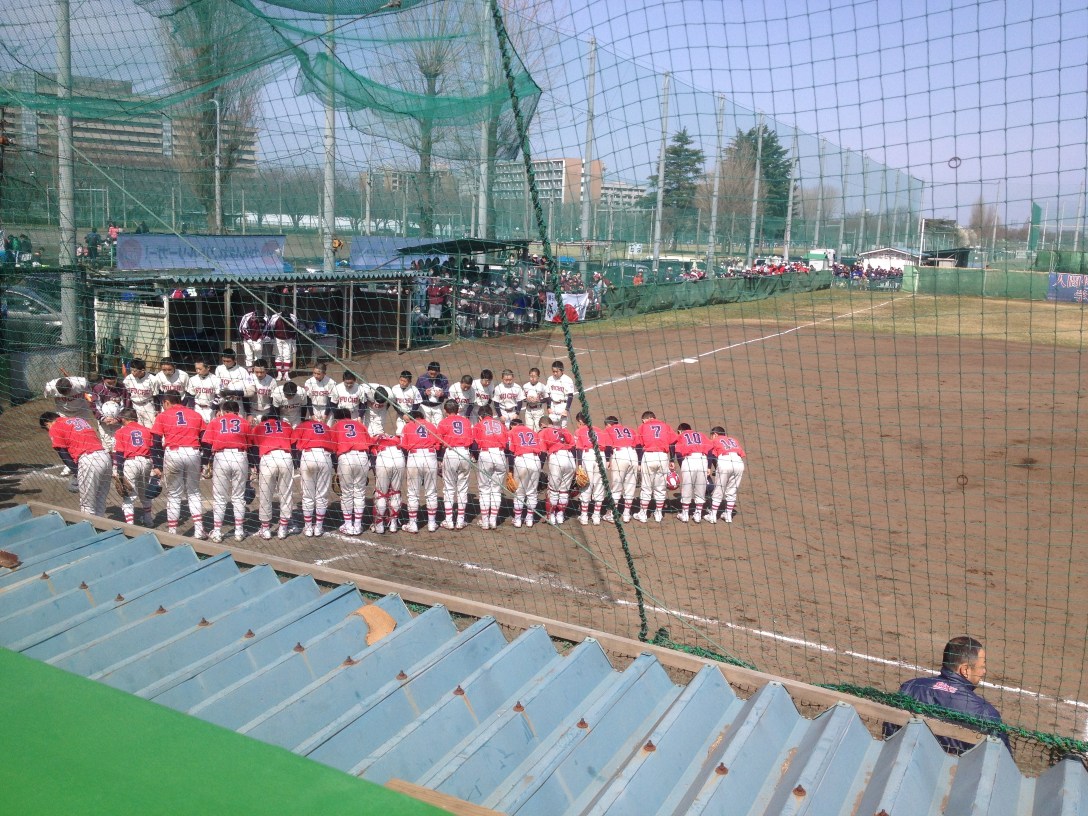
There are three bows that mark the end of practice. First, the players and coaches bow to the field. Then the players, coaches, and parents bow to one another. Lastly, the players bow to the coaches. Translations of the words that take place during these bows to come. Until then the gist is we thank one another for our hard work, dedication, community, and probably a few other things.


So much is to come and my days are full. The cherry blossoms are coming. There’s a breadth of 7/11 sushi to try. Let alone all of the tea.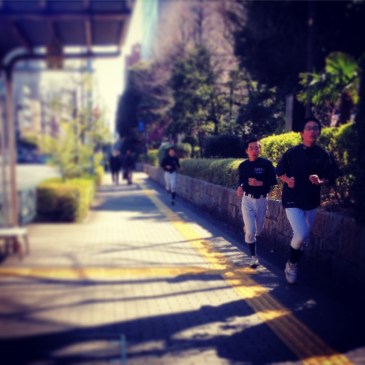
Next week, I head to Osaka to see the Spring Koshien tournament. I’ll spend the week in Osaka and Kyoto seeing as much baseball and cherry blossoms as I can. And, when I return, I think I’ll need to enroll in an intensive Japanese language course because the fact that I am entirely unable to communicate with my fellow coaches, players, and parents, makes the job of both coaching and existing at a baseball field from 7:00AM to 6:00PM difficult.
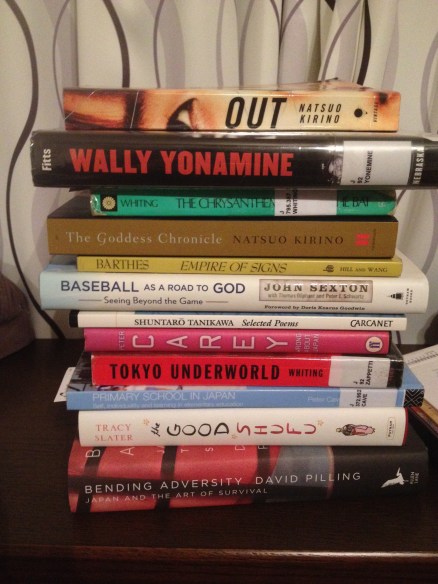
 Reconciling with the Diamond (A Girl's Best Friend)
Em! Left Facebook for a bit so kind of lost track of your posts. Will be reading em now. Miss ya!
LikeLike