TW: violence, rape (nothing graphic, but mentions / discussion of both)
Bumps now appeared as scary mountains full of craters. I had a middle-aged Swedish man on the back of my scooter. Lorenzo’s 55 kilograms poses no comparison to Hans’ build. I pleaded for no oncoming traffic at the upcoming intersection. I wanted to avoid a wobbly stop and go.
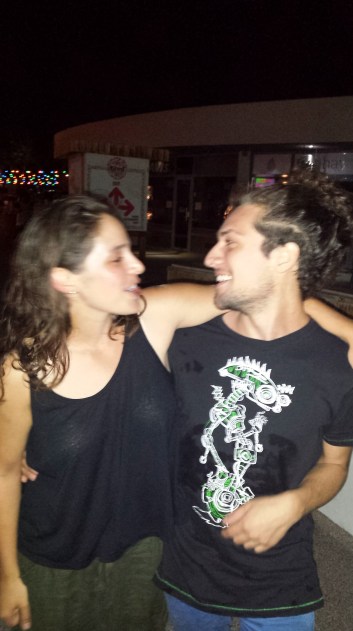
On Tuesday, before I drove Hans the few blocks from my hostel to the beach on the back of my scooter, he asked me what my parents said when I told them I would not be home, let alone in the United States, for an entire year.
“‘You’re doing a self-defense course,’” they told me in April, May, and June. In July, I did a one-day extensive course with my Mom. We hoped I could complete a longer course, but amidst travel to India and a few other summer commitments, this was the only class that fit into my schedule.
I hope my parents sleep easier at night knowing that I have some defenses. I do. The one-day course, and ability to engage myself in thought exercises of what I would do if a person attempted to assault me better prepares me to live with fear.
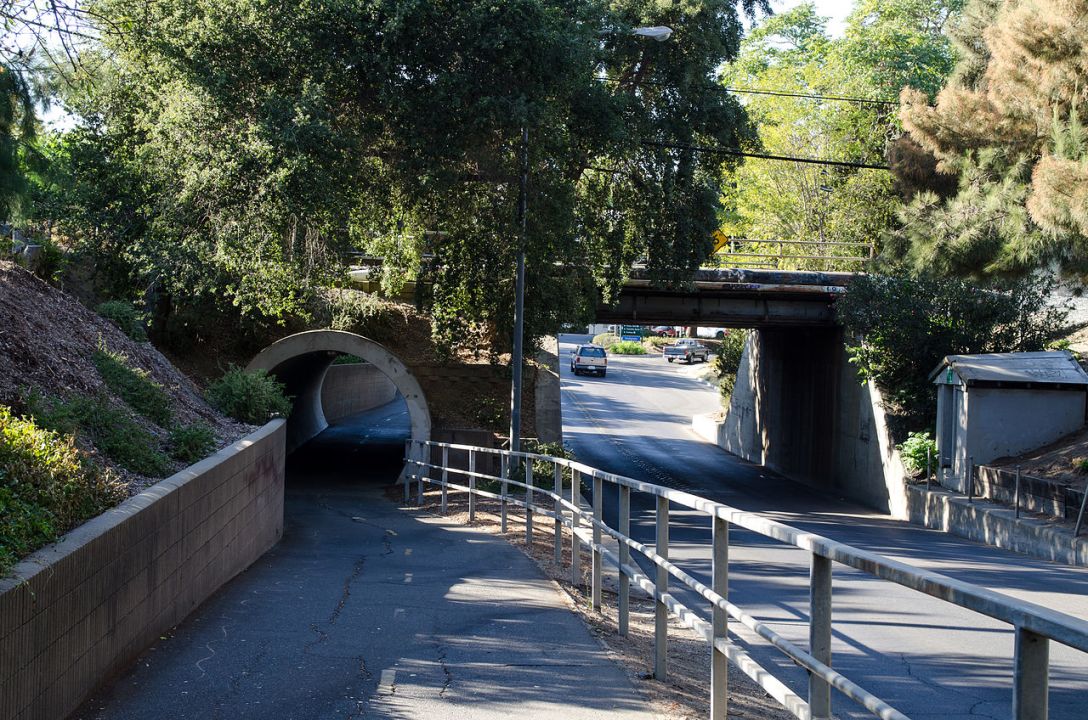
Growing up, I was defenseless in the face of fear. I remember biking home from school alone in elementary and middle school in sleepy, college-town Davis, CA fearing that someone was following me. When I biked home alone at night during high school I would constantly check over my shoulder, and I often biked as fast as possible. Given Davis’ smooth, flat cement, I probably hit or sometimes surpassed 20mph. From a young age, fear has been a part of my life. More specifically, adults around me, the media, and my imagination drilled into me that fear of strangers and fear of men was necessary and natural to remain safe and secure.
Six years ago, while at a National Softball Tournament in Los Angeles, my coach, mentor, and friend and I watched “Taken” together to the dismay and fear of my Mom. I do not generally derive entertainment from movies depicting abductions or other horrific events, but I share this to illustrate the media’s influence on my fear.
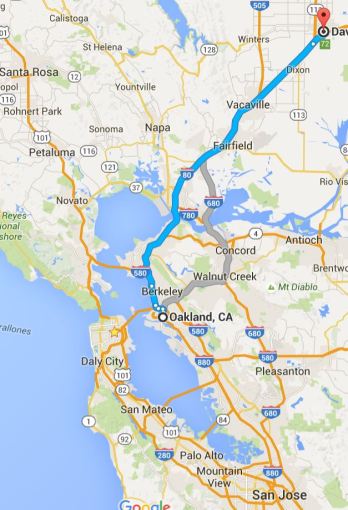
When I was a 5-year-old, my parents moved 60 miles east from Oakland, CA to Davis, CA, so that my brother and I could play in front of our house alone and attend public schools. In our neighborhood in Oakland, CA, I am told and vaguely remember that in addition to the fireworks at Oakland-Alameda County Coliseum, we often heard gunshots outside our home. I never heard a gunshot in Davis.
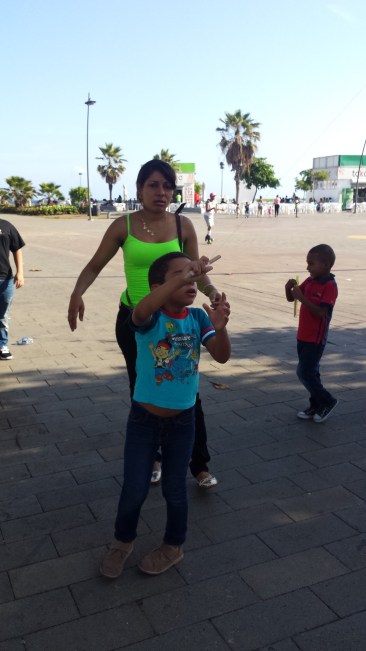
In July and August in Santo Domingo, every single time I left my house, the housekeeper and / or my host-mother would say to me, “cuidate!” This translates to, “take care, be safe, or beware.” To me, the slight rage and frequency with which they said it to me led it to translate to, “Watch out, because you stick out like a sore thumb, so people may bother you, try to rob you, or get your attention.”
This fear took a more visceral form in college, when friends of mine were victims of sexual assault and violence.
I want to discuss fear now because, as a woman, travelling alone, fear plays a role in everyday of my life. Despite its presence, the truth is that I have learned to live with fear because I am learning to control it. Fear used to limit me. I used to bike the sleepy streets of Davis, CA panting and sweating, full of fear, for no reason. I want to be smart and aware, but I am no longer willing to allow fear to limit and control my actions. I never went out alone after dark in the Dominican Republic. I stand by that decision. It was safer to avoid doing so, and luckily, I had a community with which I could spend hot, summer nights. But, I want to admit that fear limited me in the Dominican Republic. It made me uncomfortable and stiff. Constantly bearing the staring eyes of the people around me made me live rigidly. There is a difference between discomfort and fear, but they were deeply related throughout my time in the Dominican Republic. I, unfortunately, did not have the tools to distinguish between the two and control either while I was in Santo Domingo.
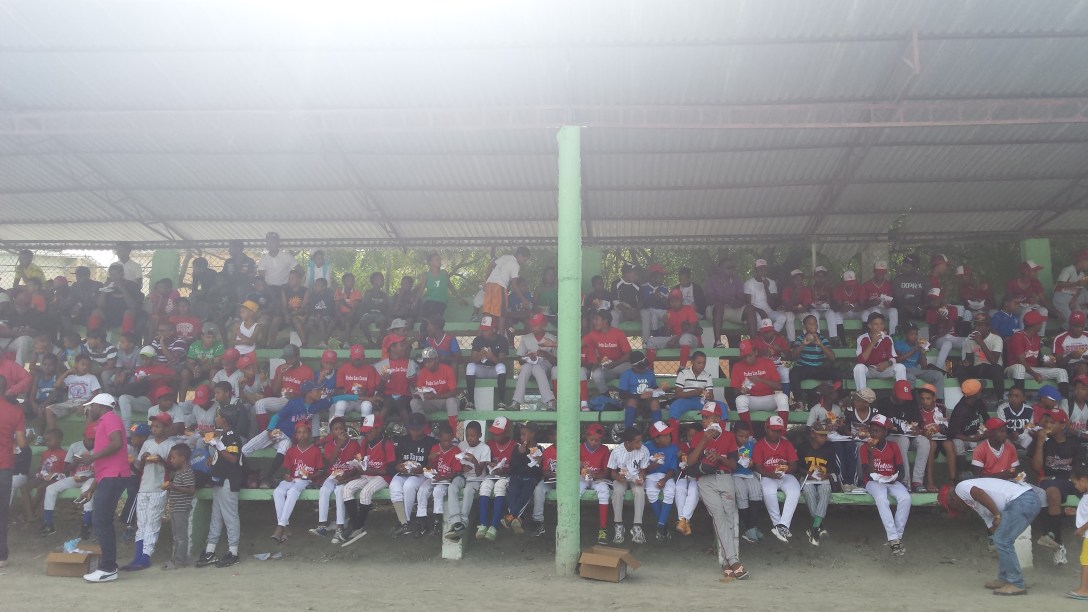
Confined to grandstands of baseball diamonds, offices of Major League Baseball, and corners of subway cars that attracted the eyes of all riders, I decided to escape this comfort and go to Puerto Rico. I hoped I could find my way onto more baseball diamonds in Puerto Rico. I did not. I moved more freely in the streets. I blended in. People spoke Spanish to me, rather than broken English. Yet, despite the fact that I blended in better in Puerto Rico, I still moved and lived with a certain timidity and a fear, not of violence but of more rejection or confinement to grandstands.
The first fear I had to shake was that of exclusion from the game of baseball. I am not sure that I will never experience that fear again, but I have absolutely freed myself from it here in Curacao. It feels great.
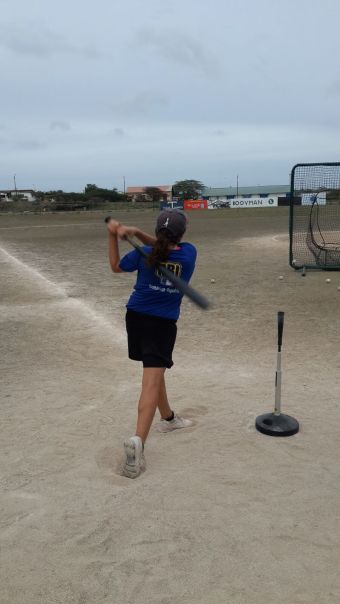
I have also shaken my fear of violence here on this island. I have to say, I think part of my ability to rid myself of all of these fears is due to my scooter. Increased ability to move from neighborhood to neighborhood, ballpark to ballpark, and from home (at the hostel) to out and about allots a level of freedom I had not yet experienced. Despite all of this, my scooter will not follow me around the world, and I hope my newfound brave, self-determination will.
I did not know it at the time, but throughout my growth to find bravery amidst fear, I followed three rules created by Black Lives Matter (BLM) and championed by Gloria Steinem. I stumbled across the principles via my Aunt who found them in Steinem’s autobiography. Steinem has ended every talk she has given with these principles since she marched in a BLM demonstration. Here are the three guidelines:
- Lead with love.
- Low ego, high impact.
- Move at the speed of trust.
These three rules help me know when to let fear drive and control my actions and when to place fear in my back pocket or even throw it out. I did not have these guidelines in their purest, strictest sense in the Dominican Republic. I found them and applied them strictly once I left Puerto Rico still entirely ostracized from baseball.

I apply these guidelines in regards to my research and every situation that confronts me. Here’s an example: last week, Lorenzo and I went out with our friend Andrew. After a night on the town, we decided Andrew should not drive home, so I let him sleep on the spare bed in the room of my hostel. I woke up early and got to work on my writing and podcast-making (it’s been a slow process). Andrew eventually woke up and went home. Mysteries and uncertainty compel people to assumptions, especially when men and women are involved. When the hostel guests found out that Andrew was not staying with Lorenzo, people wondered about where he slept. I explained to the guests and my newfound community that there was absolutely nothing romantic between me and Lorenzo’s friend Andrew. Instead, we were friends. Andrew should not have been on the road. So he slept on the spare bed in my room. To this, I had to endure two Dutch women explaining to me that I was lucky I did not get raped. Despite the fact that I know Andrew, live across a paper-thin door from the hostel’s innkeeper / mom, I was scorned and told I was lucky not to have been assaulted. These women told me men generally could not be trusted and cannot safely sleep in the same room as a woman.
This is not the first time amidst this Fellowship-year that I have been told what I can and cannot do as a woman.
When I told individuals involved in MLB that I was travelling to Santo Domingo alone, and that I wouldn’t have my own car, they cautioned and questioned me tersely:
“Where will you live?”
“How will you get around? Because transportation in la republica is difficult. I don’t trust public transportation. The roads are horrible. Are you sure you won’t have a car?”
In the preliminary stages of applying for this Fellowship, some individuals expressed huge concerns at my desire to travel to Curacao.
“You cannot go to Venezuela!” they told me. “It’s far too dangerous.”
Curacao is in not part of Venezuela. It is just north of the South American nation, but it is a constituent country of The Netherlands.
Each of these stories illustrate a pattern. People and structures explain to me that I must live fearfully and limit my actions. I refuse to accept and buy into the fears inflicted upon me by others. Instead, I will continue (now, consciously) to use BLM’s three rules to evaluate and grow alongside the people I meet and places I go.
I apply these rules, but it still hurts and exhausts me to constantly wonder if people’s generosity roots in goodness or not. This is a burden that weighs on me, but I understand that it is necessary. I have experienced its necessity in the first few months of this adventure.
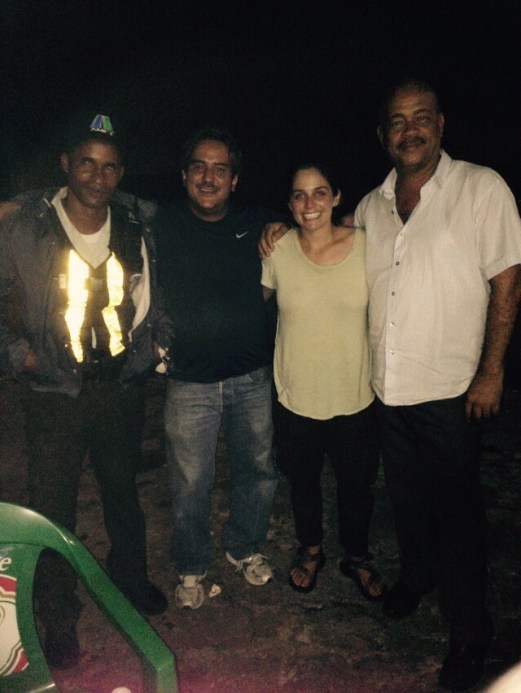
I met a buscón* on a sweaty Saturday at a Pittsburgh Pirates tryout in Boca Chica, Dominican Republic. When I met Marcus, I was still confined to slacks and MLB’s office. Marcus had multiple players attending the tryout. He expressed interest in my research in a respectful, curious way. After a bit of conversation and time in the grandstands, he invited me to attend his teams’ practice at Santo Domingo’s Estadio Olympico.
I discussed attending this practice as huge achievement in a prior blog post. At the practice, Marcus introduced me to his players. He explained that I was a ballplayer (if I recall correctly, he used the word pelotera), travelling the world researching, studying, and playing baseball.
In the DR, baseball is often relegated to men of a lower-economic class, so I have to hope that this introduction and my ability to catch and throw made these young men’s worlds a tiny bit bigger. Playing baseball alongside them and witnessing that for them, baseball is not hobby, but rather represents an opportunity to achieve economic mobility, made the size of my world grow immensely.
Attending Marcus’ practice allowed me to play the first game of catch amidst my fellowship year in which I am attempting to reconcile with a game from which I was ostracized. Thus, I consider my connection with Marcus and his players a huge success and step towards my ultimate goal of a restorative experience between myself and the game of baseball, its male-dominated atmosphere, and my relentless desire to escape the confines of the bleachers.
Despite the success Marcus afforded me, what I did not mention in a prior blog post is that after the practice at Estadio Olympico, we went to a tryout at the Boston Red Sox Academy. Marcus insisted that I sit in the front seat, something I did not want to do as a guest, travelling with players en route to a professional baseball tryout. I thought it natural and respectful to take the limited legroom of the backseat. I did not get my way. When we got to the Red Sox Academy, Marcus’ two players hopped out of the car, and before I could hop out, Marcus asked to hold my hand, and he said to me, “Dame un besito.” This translates to, ‘give me a kiss,’ if your imagination did not account for the language barrier. It hurts me to share this with people I love, because I imagine they will experience fear for me and resentment towards Marcus, cultures, or people. I am an extraordinarily private person, so it feels vulnerable to share this.
I said no, brashly, and I exited the car. The tryout ensued. I met James Kang, a Pitzer graduate who played in the Red Sox organization. He assumed the only woman at the Red Sox Academy in Boca Chica wearing a Sagehens hat must be the woman who emailed him a few months ago thanks to a referral from Adam Gardner. We chatted, and ended up seeing each other a few more times in Santo Domingo. James understood and empathized with the trials of living alone in the Dominican Republic. Although, on multiple occasions, James said to me that he simply could not imagine what it must be like to be a woman, alone in Santo Domingo.
A few hours later, after the tryout, we drove back to the capital. Marcus dropped one player off at home, and then we progressed back to Estadio Olympico. When we arrived, the same scenario ensued. Marcus asked me for a kiss, and he asked me if he made me nervous. I exited the car, and I told him I did not want him to say those things to me. He apologized. Vehemently. But, to be frank, it didn’t matter. I could not follow rule one or three with him anymore. I could not lead with love or move at the speed of trust, because love for him might endanger me and I did not trust him.
I share this to express that I spend every moment of my adventuring, waking life analyzing the people I meet and situations I enter. I follow my rules and use them to control and regulate my fears. I deploy this system. It works well, but it exhausts me emotionally to constantly move with skepticism and worry no farther away than my back pocket.
Although, this situation in the Dominican Republic occurred months ago, my system for interacting with the world has not changed. Last week, I met an individual visiting Curacao on a scouting trip. Luis**, a scout and trainer with an Academy in Venezuela, immediately expressed interest and support for my project. He gave me his email, business card, and phone number. He invited me to take batting practice the next day. I wanted to accept his offer, but the truth was, I did not know Luis at all. I did not know if his players were attending the practice. Regardless, I had prior plans. I forwent the opportunity to attend batting practice because I had arranged an interview with one of the island’s’ famous Little League coaches. My decision whether or not to attend was made easy. I did not have to consider the weight nor validity of either of my fear or my prejudice. I share this anecdote to fully reveal that fear and distrust are rarely, if ever, far from me.
My constant proximity to fear and the weight it bears on me cause me to become angry and frustrated when two Dutch women decide to explain to me that I was lucky I did not get raped, or when people question my ability to live and transport myself in Santo Domingo, or when people tell me I cannot go to certain places or countries as a woman. In my opinion, people’s desire to tell me what I can and cannot do and what I must fear roots in the patriarchal desire to control women’s bodies, intellect, and success. Each of these pieces of unsolicited advice I received rooted in kindness and love. I do not deny that. Regardless of what drives these messages, I refuse to accept limitations that people want to oppose upon me. I will fight them. I am not afraid to get angry. Although, full of anger or joy, trust or distrust, I will never let go of my rules: “Lead with love. Low ego, high impact. Move at the speed of trust.” Thank you, Black Lives Matter, for serving as the cataphatic mind in the room. Thank you, Steinem, for championing and bringing visibility to BLM’s principles. And, thank you, Auntie, for your endless love, support, and cheerleading.
*Spanish for searcher. The Dominican word for trainers who find young ballplayers, train them, sometimes feed and house them, and receive a slice of 16-year-old ballplayers’ signing bonuses when they become professional players.
**Name change because I am currently on a tiny island. Although this island is so small, the name change likely won’t veil me or this friendly scout.
 Reconciling with the Diamond (A Girl's Best Friend)
Gripping and incredibly moving piece, thanks for it! You’re courageous and inspirational, and strong. –separate thought: instead of “Reconciling with the diamond,” maybe you should rename your project: “Diamonds are a girl’s best friend.” Just a thought. Keep those missives coming!
LikeLike
I have to admit, I originally thought you were John Trewartha, a long-time friend of Lorn Foster who lives in Illinois. When I heard McGwire, my mind jumped to the midwest. But it should have jumped to Claremont.
The full title of my project, according to the Watson Foundation is “Reconciling with the Diamond (A Girl’s Best Friend).”
It can’t be my best friend until I have some restorative, reconciliatory experience!
LikeLiked by 1 person
You moved me through so many emotions, little em. I can definitely empathize with the constant battle to let love reign over fear while traveling. Putting myself in seemingly uncomfortable situations (and everything seems uncomfortable at first!!!) is the way i love interacting with the world- open and genuine and vulnerable interactions. But I definitely had to learn to trust my gut, and develop my gut feelings, and not let ignorance or idealism compromise my safety. Like me, I feel that you are also very street smart! I don’t show it, because like you, I love to lead with love. I have no doubt you will improve on this and know when to think with your head (car situation) or lead with your heart (letting your friend stay in your hostel). I truly feel that the times when I lead with love were some of the most eye-opening and genuine interactions I’ve had in my lifetime, and I wouldn’t throw that away even if it does mean recognizing fear when necessary. I love you and stay safe. ANYWAYS- i wanted to send this to your email but couldnt find what it is!! send me an email!!!! sarahshermanator@gmail.com
love you always em.
LikeLike