My beloved mother warned me: the word reconciliation doesn’t mean anything. Despite the fact that I didn’t accept my mom’s advice to change the title of my Watson fellowship project, I do think there is immense truth to her opinion that the word reconciliation, especially in the context of reconciling with a baseball diamond, lacks meaning. In this sense, it’s similar to words like “plethora” or “passion.” I believe these words once carried oomph, but here in the year 2015, their meanings have been rendered ambiguous by overuse and possibly misuse.
So, I accepted my Mom’s opinion. My title in a sense lacked clarity or oomph. I’ve now been in the Dominican Republic for close to two months, and I feel ready to unpack and talk about reconciliation because, to be frank, I have not reconciled with the diamond. That’s not to say that this time has been worthless.
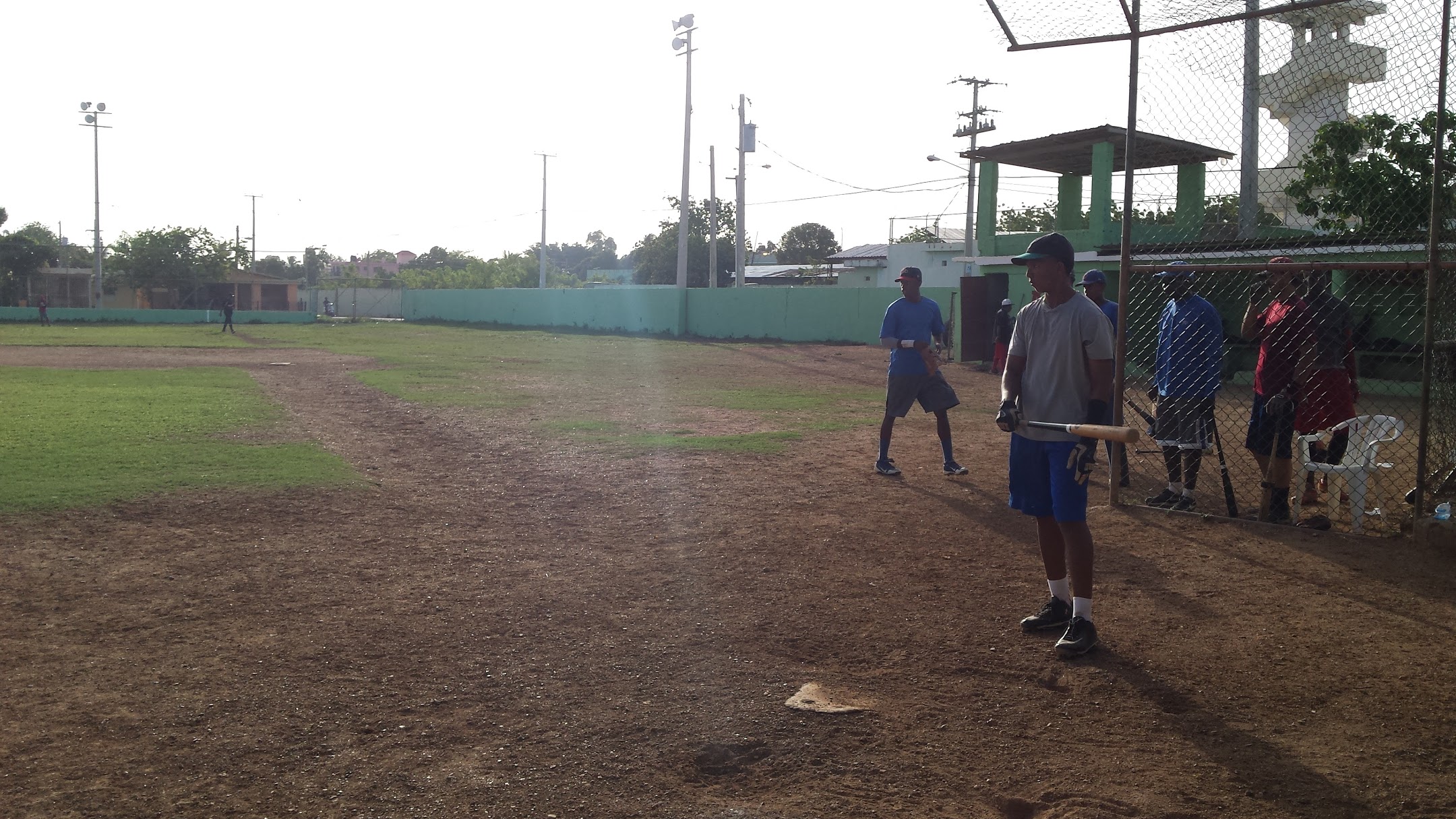
I’ve spent time at over 30 baseball diamonds in the past seven weeks. I’ve attended clinics with Major League Baseball, I’ve watched Dominican Summer League games at MLB Academies, I’ve practiced with amateur leagues at Santo Domingo’s Estadio Olympico, I’ve visited diamonds or, pleys as they call them here, off dirt roads, in San Pedro de Macoris, where buscones or coaches / trainers buy players shoes, gloves, and equipment and teach them baseball every single day until they’re old enough to sign with a MLB organization. At that point, the story says the buscones urge players to pay them 30% of their signing bonuses. Some say it’s just for the meals and equipment they have given the prospects. Other say it’s unjust. Regardless, the potential for corruption and injustice is obvious.
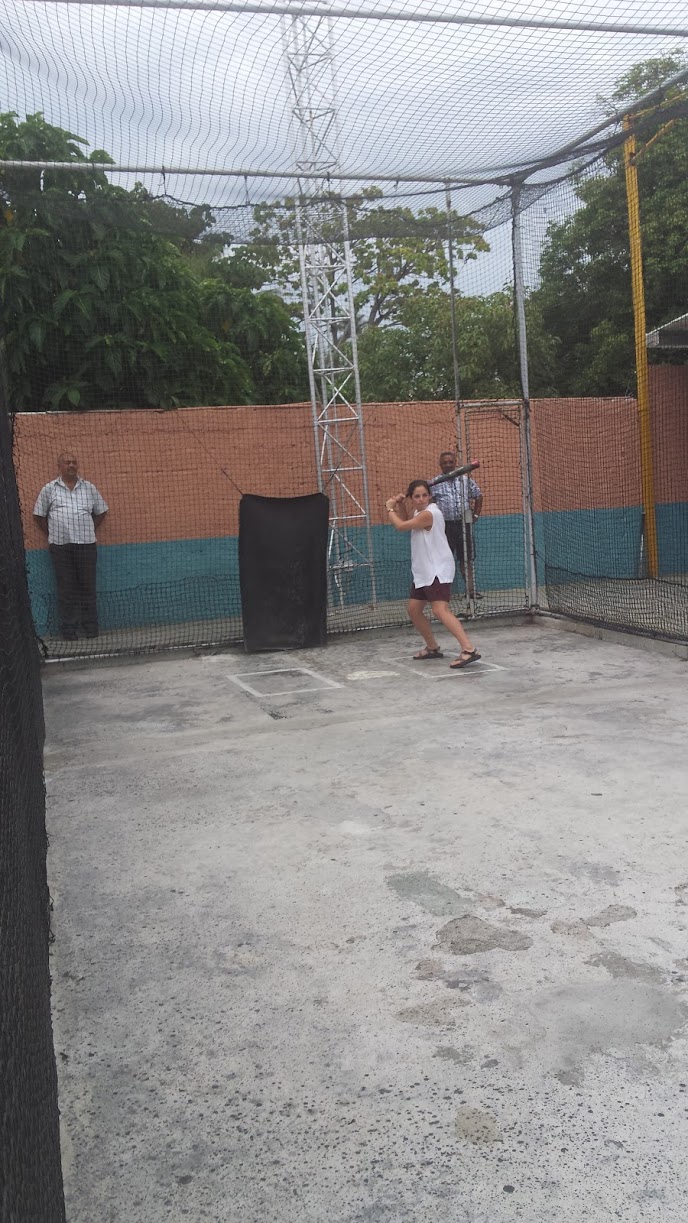
Despite all of this time around baseball, I have been timid to cultivate true reconciliation. With some help from Fania Davis, I define the reconciliation that I pursue as a restorative experience that both accounts for my being ostracized from the game of baseball and enables me to truly participate in it again. I haven’t yet let my guard down in pursuit of reconciliation because I’ve been attempting to understand what baseball is for this country and the young men with whom I interact.
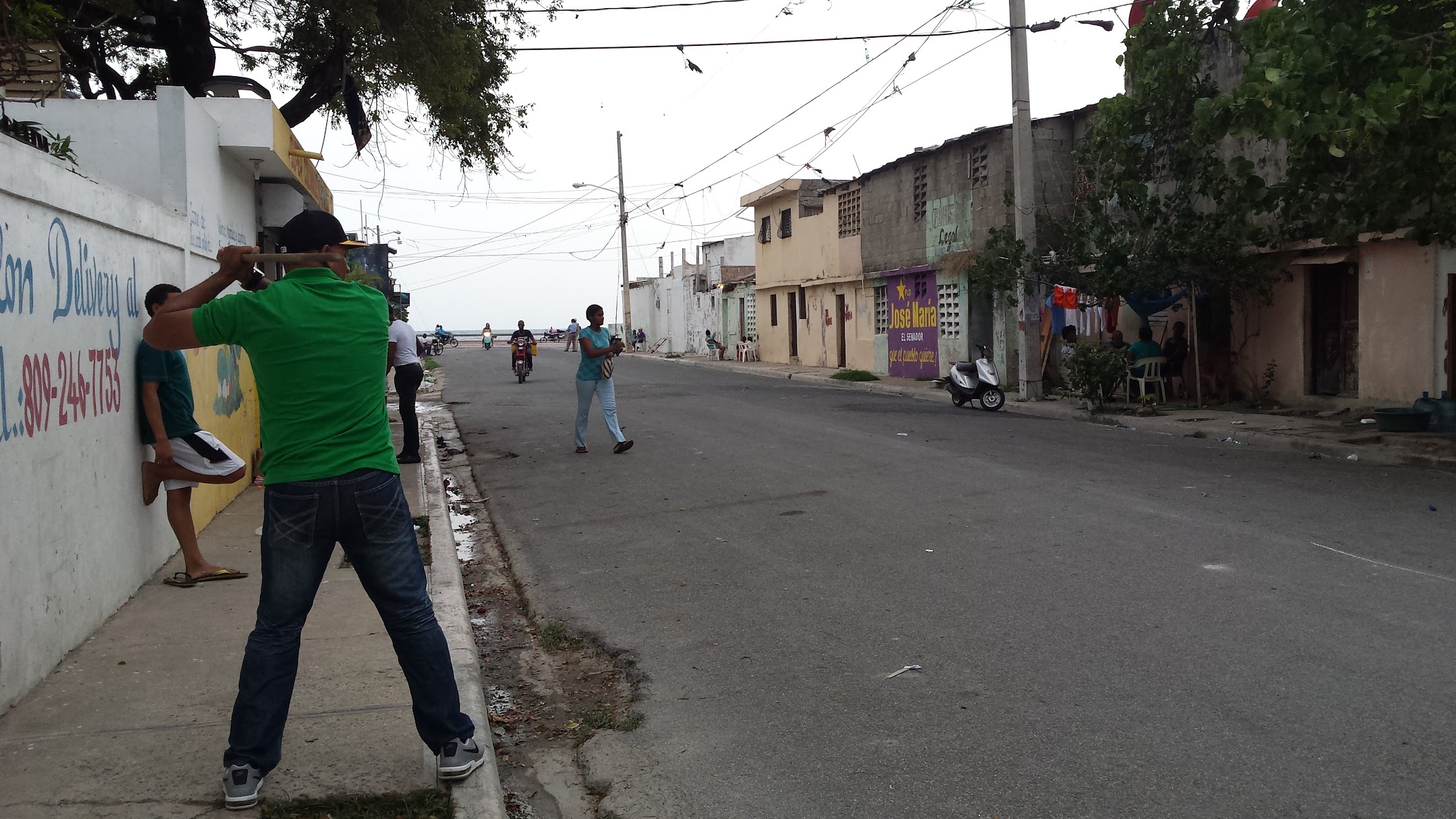
San Pedro de Macoris
Baseball is recreation for me. It’s nothing more than sport. I treasure baseball for its difficulty, strategy, and ability to create camaraderie, but it is mostly a vehicle for entertainment. On the other hand, in San Pedro de Macoris, where I spent all of last week learning to scout, baseball seemed far from recreation. While shadowing Tom, a Pittsburgh Pirates scout, I went to multiple tryouts everyday—sometimes four—usually two or three. I took notes, and Tom and I compared and discussed them. It’s pretty simple (if you have a baseball eye) and heartbreaking: you analyze a player’s ability, their fundamentals, and their body type.* It’s heartbreaking because I saw multiple 15-19 year old boys dreams’ to sleep with air conditioning, eat three meals a day, receive coaching, and fantasize of the Big Leagues from an MLB Academy shatter. Tom and I shattered multiple dreams every single day deeming young men “not prospects” or simply “NP” written in a notebook or on a clipboard. Amidst this atmosphere, where baseball represents the possibility of decent living conditions, food, and the idea of economic mobility, my desire to “reconcile with the diamond” has been tabled for now. Though other factors have also limited my desire to “reconcile” with the diamond. I want to identify them as well, as they seem integral to learning from this experience.
Fania Davis recently wrote a piece for Yes Magazine urging the United States to use a truth and reconciliation process to stop the epidemic of anti-black violence and move towards the path of reconciliation. Her insights about reconciliation and restorative justice greatly influenced my thoughts. I urge you to check them out, especially if you’re a person who wonders how communities can work to restore justice. That’s a big statement. So I’ll put it like this: if you’ve ever felt lost amongst the messiness of the world—specifically towards racial violence and inequality—I recommend you check her article out. It works towards solutions.
Davis defines reconciliation as a restorative process which accounts for past injustice while working towards new cohesion. That definition invokes what I want as I surround myself with baseball for the next year. In fact, I think the reason that I dismissed my Mom’s advice despite its validity is because I truly wanted to muddle in attempted reconciliation. Baseball is a perfect vehicle.
I have been a far shyer version of myself during the past six weeks. I have been timid because I’m learning that baseball isn’t simply recreation in this country. But, I have also been guarded and reticent because I am not accustomed to something as arbitrary as eye color having such a significant effect on my daily life. Within the context of my whiteness impacting close to every interaction I have, my shyness has gotten some time up to bat and has limited my desire and efforts to reconcile with the baseball diamond. I recently read Ta-Nehisi Coates’ Between the World and Me, which helped me make sense of my recent reticence. Coates’ book is a letter to his son about what it is like to be black in the United States. If I had read Coates book in prior places I’ve dwelled—in Davis, CA or in my Aunt’s backyard in Oakland, CA, or on a college campus on the edge of Los Angeles’ sprawl—I believe I would have been moved by the book. It would have elicited empathy and fear in me as Coates talks to his son about his fear of bodily harm. That said, having read Coates book here, in Santo Domingo, enabled me to feel that empathy and fear, but also to identify with some of the experiences Coates discusses.
I am shyer here because the color of my skin and the friction between my culture and this culture draw uncanny amounts of attention. If I put sunscreen on, everyone mentions the color of my skin. When I walk on the malecon, men yell at me. And, everyone stares, all the time. It’s one thing when I’m on a sidewalk strolling along and I am just a few steps from never seeing a person again, but on the subway this morning, when everyone just holds their eyes affixed my hat, my hair, my eyes, or my constantly sunburnt skin, it is truthfully exhausting to endure. And, it hurts. This pain and exhaustion enables me to identify with Coates. I want to point out that it is one thing to identify with this alienating experience when you’re in a foreign country, far away from home. Meanwhile, Coates shares his experience of constantly enduring that type of exhausting ridicule at home, in his own country simply because of the color of his skin. Despite the fact that I can more fully identify with what Coates talks about now, I will never truly understand what it is like to born into that, to experience it in a place you call home, without ever getting a chance to escape the paradigm. Coates description of what it is like to be black in the United States strikes deep chords of empathy, fear, and sadness within me. Deeper chords now, since I am experiencing a slight iteration of the ridicule here in Santo Domingo.
I have been tentative to cultivate a restorative experience of reconciliation with the game of baseball here in the Dominican Republic because my experience in the United States only taught me that my gender confined me from the game. My race and culture played no part in my apparent difference and exclusion. The multifaceted difference that confines me to foul territory and grandstands here is much more complex than what I faced playing Little League in Davis, CA or recreationally at Pomona College.
*A clarification: it’s actually quite hard. Only 8% of players signed to professional contracts make it to the Big Leagues. I’m suggesting that with baseball knowledge it’s not rocket science to identify the 100% players who will sign, yet it’s much harder to hit the bullseye on the 8%.
 Reconciling with the Diamond (A Girl's Best Friend)
When can we chat? I’ve been reluctant to read Coates.
Went to CCA with Ken & the folk.
Wedding was awesome. It is weird to understand how much you are loved as a teacher & friend.
Doc
Sent from my iPhone
LikeLike
Your writing brings me to tears. So brutally honest. Reconciling with oneself is something that most of us struggle with.
Looking forward to more from Puerto Rico.
As always keeping you in my heart.
Xoxoxo Amy
>
LikeLike
I hope our roads cross again soon Emily. Good luck in Puerto Rico!
LikeLike