What is comedy? A dear friend, Sricharitha Mullaguru, tells me that comedy is when the opposite of what one might expect happens. Or, comedy is a disruption in the natural flow of things. It’s when something that’s not quite right happens—not necessarily in a good way. I like her definition. I think it works towards the truth.
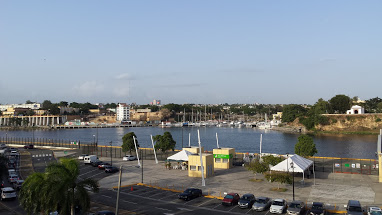
I arrived in Santo Domingo 14 days ago to begin my Watson Fellowship. I spent my first few days at an AirBnB. On my first day, another guest at the home took me to la Zona Colonial. I looked out at the Río Ozama where Christopher Columbus first landed the Santa Maria. Yes, when Columbus, or Colón, as they call him here, discovered America, he landed here in Santo Domingo. I tried to understand the depth of the historical context. Colón embodies and represents the imperialism that the Spanish Crown sparked.
I’ve found that your boy Howard Zinn helps me attempt to grasp the magnitude of the moment in which Colón arrived:
Chapter 1: COLUMBUS, THE INDIANS, AND HUMAN PROGRESS
Arawak men and women, naked, tawny, and full of wonder, emerged from their villages onto the island’s beaches and swam out to get a closer look at the strange big boat. When Columbus and his sailors came ashore, carrying swords, speaking oddly, the Arawaks ran to greet them, brought them food, water, gifts. He later wrote of this in his log:
They … brought us parrots and balls of cotton and spears and many other things, which they exchanged for the glass beads and hawks’ bells. They willingly traded everything they owned… . They were well-built, with good bodies and handsome features…. They do not bear arms, and do not know them, for I showed them a sword, they took it by the edge and cut themselves out of ignorance. They have no iron. Their spears are made of cane… . They would make fine servants…. With fifty men we could subjugate them all and make them do whatever we want.
These Arawaks were much like Indians on the mainland, who were remarkable (European observers were to say again and again) for their hospitality, their belief in sharing. These traits did not stand out in the Europe of the Renaissance, dominated as it was by the religion of popes, the government of kings, the frenzy for money that marked Western civilization and its first messenger to the Americas, Christopher Columbus.
Source: http://www.historyisaweapon.com/zinnapeopleshistory.html
So the island people greeted Colón with open arms and gifts, and so began the quest to enslave people. The first foreigner that arrived here immediately sought to find gold, tap into wealth, and “with fifty men […] subjugate them all and make them do whatever we want.” That’s the context of where I am beginning my yearlong journey across the world.
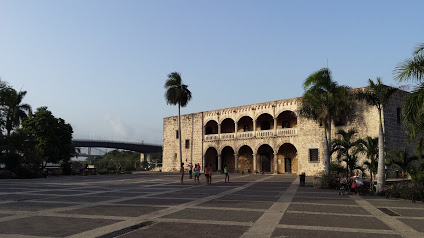
I try to hold this history in my head while thinking about the fact that I’ve been sent here to try and think about and create, “a humane existence in the world.” When I hold both the history and the Watson Fellowship’s objective in my head, I laugh. Then, I ask why I’m laughing. I think I laugh because sending me to Santo Domingo to ponder humane existence 523 years after Colón landed here and began subjugation and enslavement does seem to disrupt the natural flow of things. These 500 years should have brought us to humane existence or alienated us from it altogether. Thus, why am I here now to think critically about what a humane life or world could like?
Even though it might not align with any natural flow, it feels right to ponder this question. It feels right to be here and pay respects to past evils. It feels good to try and ponder what a world with less evil could look like.
I would not be here, capable of fathoming this big question, without the education I’ve received. Phenomenal education seems central to humane existence. In my first eight days of this Fellowship, I’m beginning to realize that my education is an anomaly. It’s an anomaly that deserves treasuring, necessitates deliberate use, and one that others deserve.
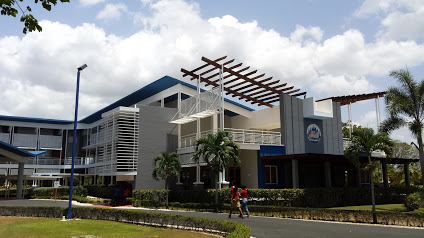
Last week, I visited the Houston Astros Academy outside of Santo Domingo. All 30 Major League Baseball teams have an Academy on the island. The Dodgers were the first to set up an Academy. All the other clubs followed, and somewhere along the path MLB as an institution and governing body realized they should set up shop to oversee and administer the clubs’ actions.
At the Astros Academy, I sat in and observed their English class. They play baseball all morning, until 2 P.M. Then, they eat, rest, and in the afternoon they have some academic class. The rigor of the academics varies significantly at each Academy. At the Astros Academy, the students were asked to fill out a Player Profile. The profiles ask for students’ name, date of birth, and other basic information that MLB collects. The sheets were in English, so the MLB representative who I was with put a translation of each word on the board.
Name—Nombre Date of Birth—Fecha de nacimiento Address—Locación
The students in the class were unable to complete the form without significant help from MLB representatives and their teacher. The sheet took about a half an hour. It asked for about 10 pieces of information. Each student worked diligently, looking back from the whiteboard to their paper. They called the teacher and other adults for help.
Just before I left the States, former ESPN Radio host Colin Cowherd was fired for saying insensitive, ignorant things about Dominicans’ intelligence. A quick google search will get you up to speed if you’re interested, but I’m sure you can imagine the gist. When I arrived here in the D.R., MLB’s main administrator referred me to the following article in response to Cowherd’s remarks: https://www.linkedin.com/pulse/word-dominican-baseball-player-intelligence-linda-wawrzyniak
When I first read Linda Wawrzniak’s piece, I had no idea what she was talking about. After visiting the Astros’ Academy, Wawrzniaks’s piece came to life. It took the Astros Prospects over a half an hour to fill out the sheet because they lack brain schema that I have and take for granted. Until two months ago, the Astros prospects haven’t been to schools with whiteboards. Their neurons don’t ‘tick’ or ‘connect’ in the same way as mine, and that has absolutely nothing to do with their intelligence. I think Cowherd knows that, but it’s easy to let it out of sight. It’s easy to speak brashly without thinking about or being able to imagine the drastically different experience of someone else’s life. I mean, I did take an entire college course on the shortcomings of the U.S. education system and difficulty at implementing effective education policy such as No Child Left Behind. It is true: the U.S. education system is subpar. NCLB doesn’t work. That said, to examine the U.S. standards is to look through one lens. There are many other lenses. It seems important to identify which lens one uses while thinking about or working towards a humane existence in the world. I’m using a different lens when I look at MLB Academies’ academic programs. I see, quantify, and qualify different things.
After my trip to India, I said that the amount of trash that was everywhere boggled my mind. That said, the difference of brain schema that I witnessed this past week was more mind boggling than the trash. So was a moment I shared with Ana, the housekeeper at the homestay I’m now living at. Ana explained to me that she lives in the South of the D.R. Thursday, July 30, 2015 was both of our first days in Santo Domingo. She was telling me about her kids, about how much she misses them, and how far away they are. She says her heart hurts because she misses them so much. I asked her how long it takes to get to her home. She told me she takes a bus at 8 A.M. and arrives at 11. She asked me how long that meant the trip took. I asked her if she arrived at 11 the next morning and she explained that she arrives the same morning. I haven’t been trusting my Spanish enough lately. I still thought I misunderstood. I didn’t understand what she was asking me or how long the trip took. Thus, she deliberately counted slowly in three of her fingers: nueve, diez, once. Uno, dos, tres. It takes me three hours, she said.
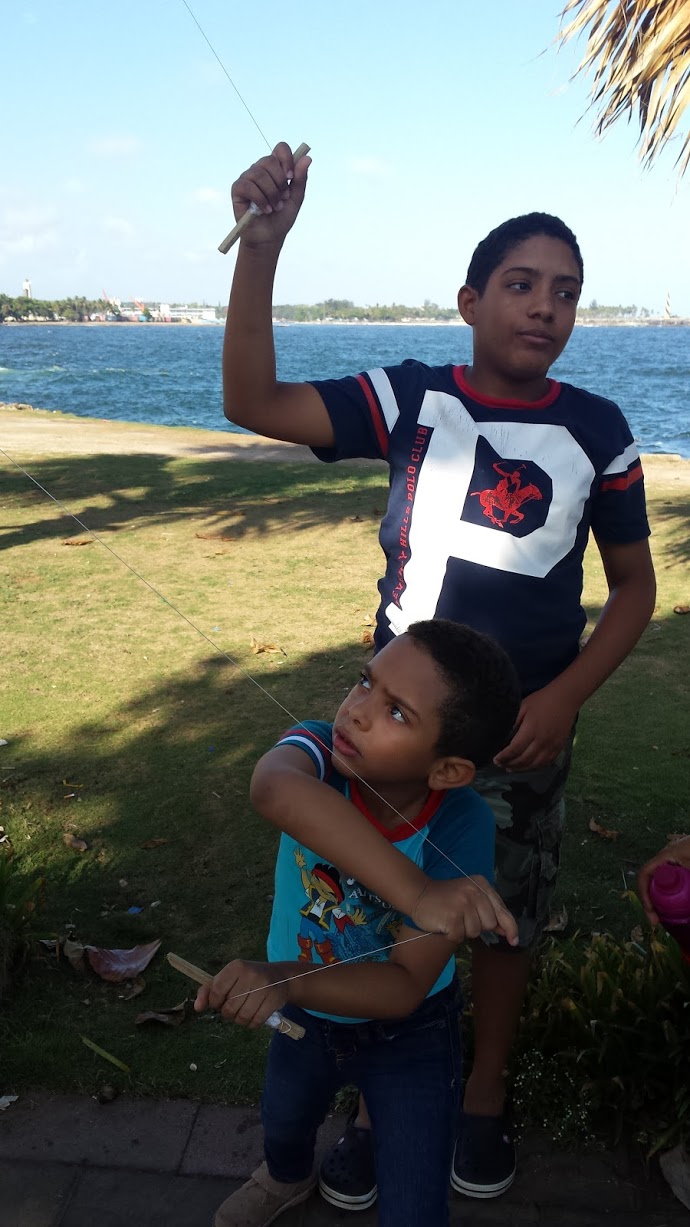
My brain schema simply could not understand that Ana did not know what 11 minus 8 was off the bat (baseball pun ;)). Keep in mind, she figured it out while I sat bewildered. I had no idea what she was asking me. I assumed I misunderstood her question. The difficulty for which it was for me to understand Ana’s lived experiences reveals a deep human weakness: that even when we put forth our best effort we struggle to truly put ourselves into another’s experience and imagine another’s reality.
Now, back to the issue at hand: comedy. I find myself baffled and sometimes laughing when trying to piece together how the Watson, Cólon, enslavement, and I fit together. On the other hand, during this moment where Ana asked me to do some mental math, or when I attended the Astros’ English class, I was not left laughing. The sad truth is that I think I laugh at the former because I’m explicitly asked how I fit into it. The Watson Foundation has asked me how I fit into a puzzle or a sequence of events with Cólon and history. On the other hand, when I am learning about Ana’s life or getting to see a glimpse of MLB prospects’ world, I don’t wonder how I fit into it as explicitly without the prompt. I feel more separate in these instances because, unlike the former, there is no grandiose institution validating me and urging me to fit the pieces together. I want to push back against this habit. Whether or not an institution validates me, I want to force myself to fit the puzzle together. When things are most difficult to understand and when experiences challenge certain barometers I’ve held to be true, I want to try and make sense of it all. I want to explore how I fit into each of these situations. When I push myself to this extent, I want to do far more than laugh. I don’t expect to find all answers, but I think the laughing roots in bafflement, confusion, and the abstract. I want to etch away these peculiarities to figure out what a compassionate life could look like.
Baseball
There are two worlds of baseball in the DR. There is the world after kids turn 16 years old, and there is the world prior to that of amateur baseball. In my first week here, I’ve seen a solid glimpse of the MLB world. The Academies vary greatly. Some have classrooms with English courses and sound pedagogy. Others do not. Some have four diamonds, batting cages, training rooms, gyms, and clubhouses. Some have just a two diamonds, a batting cage, and an administrative facility. That said, every Academy administers an MLB world of baseball. Prospects wear official team gear, boast smart phones bought with signing bonuses, and play baseball six days a week from morning until evening.
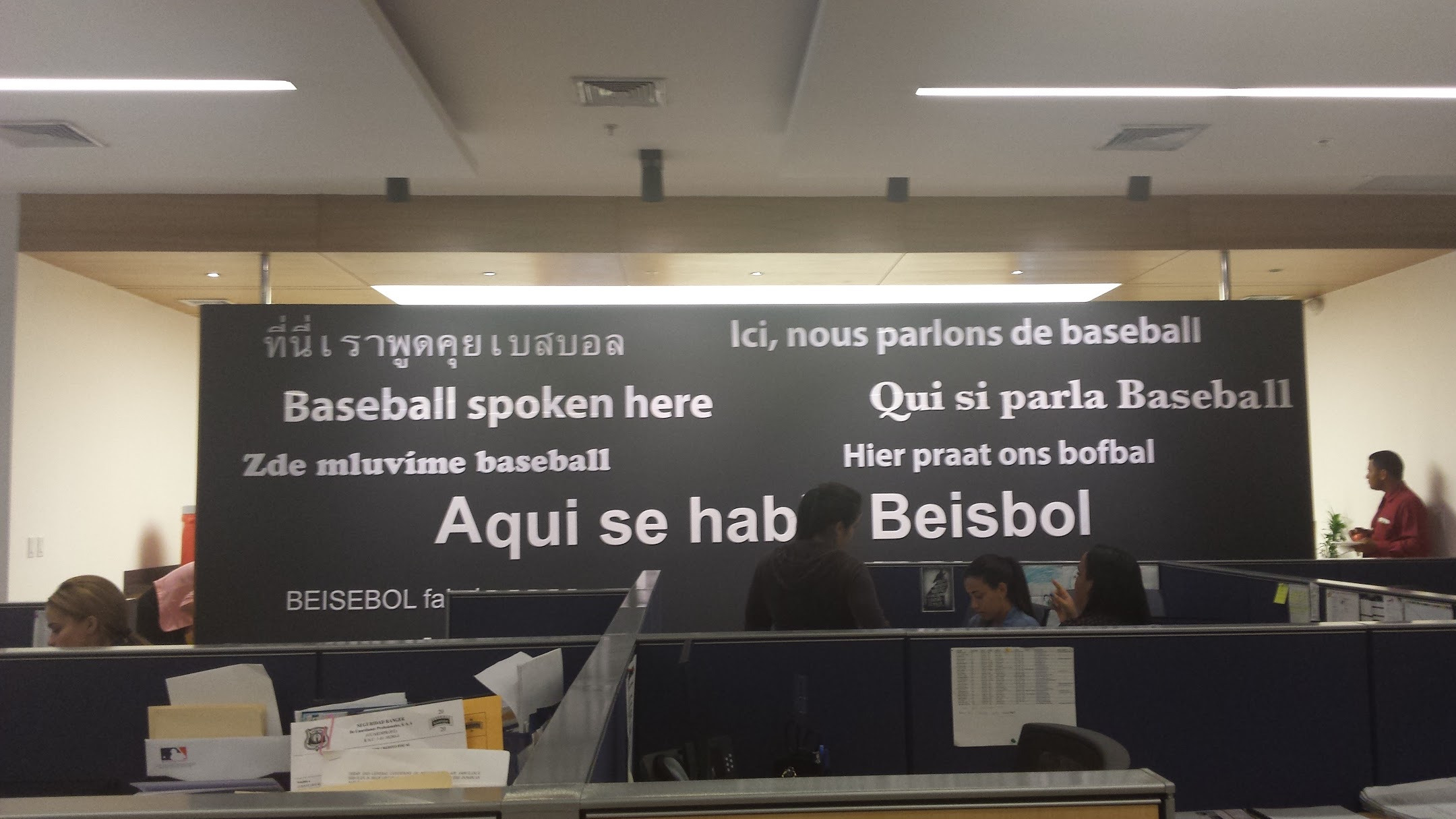
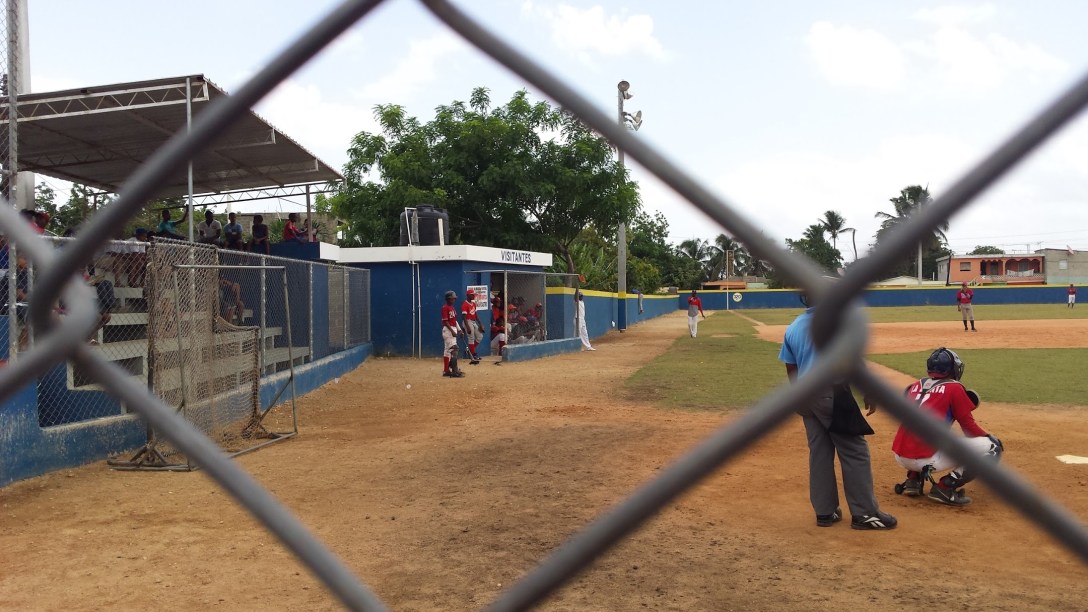
In addition to the MLB world, I’ve seen a small glimpse of the amateur baseball world. After the glimpse, this is the world I’m most interested in steeping myself in for the next six weeks here. Last week, I had the opportunity to visit the Red Sox Academy. Jesús Alou administers the academy. The Red Sox along with JetBlue have been administering a program called lindos sueños—sweet dreams—where they bring 10 Bostonions to the D.R., choose 10 Dominican high schoolers, and the 20 kids play on a baseball team together for a few weeks. In the mornings, they build a home for a Dominican family in the pueblo that neighbors the Academy, and in the afternoons they play baseball. These twenty kids play in a small tournament against Dominican teams. Alou graciously hosted me in San Isidro where I got my first glimpse of the amateur baseball on the island. The stands were packed! Everyone was yelling, cheering for their team. People in houses that surrounded the diamond watched from porches and balconies. And, the kids could play. Both pitchers were playing mid 80s at the least. I had never seen a baseball game that spirited. The three innings I saw in the pueblo of San Isidro are my favorite moments of my Fellowship thus far. The community, dreams, and spirit I saw inspires me and validates why I am here.
When this past Friday rolled around, I was exhausted and I wanted a cerveza. Everyone has told me that it’s too dangerous for me to go out alone at night, and I buy and have felt their fears. I left my house thinking I would go to a colmado—half bar / half minimart on corners of streets throughout the country. I left my apartment and passed the security business that is located next door. There happened to be a man standing outside. He was in a bulletproof vest, waiting on this motorcycle. “Tengo una preguna extraña,” I told him. –I have a weird question—
Then, I asked him if all colmados sell cerveza. I asked because some have advertisements and visible beer and rum everywhere, whereas the one on my corner is called Colmado Bani (s/o Junot Diaz) and just has an ice chest. No signs of alcohol. With a toothless smile, he assured me that all colmados have alcohol. I patted him on the shoulder. I told him he was a good friend, and off I trotted, just a stone’s throw down from my apartment on Calle Hermanos Deligne. I ordered a Brahma Light. The man at the counter popped the top off for me, wrapped the beer in newspaper and gave me a small plastic cup. I had planned to take the cerveza back to my apartment, but now it was open, and I had a cup, so I plopped down in a plastic chair on the sidewalk.
The owner rolled up a few minutes later. I know him because he has sold me water. He popped down next to me and threw a handful of rice to two pigeons on the sidewalk. We watched them peck and swallow the rice.
Then, I asked Orlando (the owner), “Eres de Bani?”
Yes, he told me. A few minutes later his brother rolled up, and they asked how I knew Bani. I explained to him that there is author in the U.S. who is from Bani, and writes about his experience between the D.R. and New Jersey. The book in which he references Bani the most won the most prestigious literary prize in the States. Their interest peaked. They wondered if they could buy La marvillosa vida breve de Oscar Wao from a nearby shop. I hope they buy it. I think they’d enjoy certain parts of the novel. After all, the only thing most people know about the D.R. is the name Trujillo and many know that from Julia Alvarez’ In the Time of the Butterflies. I think that Diaz’ discussion and insistence upon the existence of multiple narratives to each story, and the argument that reality is subjective (and often U.S.-centric) would greatly appeal to people living in Santo Domingo and other Latin American countries. I also think they’d be happy that American readers are engaging with the D.R.’s history, politics, and culture.
Then, another guy strolled up, sat down, and asked Orlando in Spanish if I was silent or talked. Orlando told him I was silent, as a joke. But, to be honest, I didn’t catch a lick of this. My ear is awful in English (Fiona Riley) and I struggle to hear my native tongue let alone another one unless I put all my attention towards listening. The voices inside my head often drown out my ability to exert this effort. After the new guy stared at me for at least 40 seconds, I asked him “Qué tal, todo?” He then jolted upright and yelled to the owner saying he thought I was silent. Orlando laughed, as did I. Turns out he spent almost 20 years in New York, including high school. When I told him I was here as part of a fellowship to study baseball, he just about had a small seizure. The news was a definite disruptor in the natural flow of things. The fact that I could fit into the world of baseball baffled him just as Cólon baffles me. We both laughed, and then things continued on another path. He got to tell me about how he is a huge Mets fan. He was in New York when the Mets won the 1987 World Series. He plays ball as well, or used to.
When it comes down to it, this country truly loves baseball. I’m too young to have seen when baseball was truly the pastime of the U.S. Thus, I’ve never seen such spirit surround the game. This spirit and love for the game feels really foreign. I could get used to it. When I took a taxi home from the MLB office my first week, the driver gave me a lesson on the 1990 World Series. The Reds swept the A’s on the back of starting pitcher José Rijo, a Dominican hero. He won both game 1 and game 4, allowing just one run.
I’ll leave you with this for now. Until next time,
EG
 Reconciling with the Diamond (A Girl's Best Friend)
Hey! It was Haiti! The Santa Maria was wrecked in Haiti! But I hope you are enjoying the DR anyway. xoxox
LikeLike